


What if the secret to a successful transformation isn't just cutting calories, but aggressively prioritising your protein-to-calorie density? With updated 2026 guidelines now recommending up to 1.6 grams of protein per kilogram of body weight, the pressure to perform is higher than ever. It's frustrating to feel constant hunger or fear losing your hard-earned muscle whilst trying to slim down. We understand that staring at another plain chicken breast is enough to make anyone quit. You deserve a strategy that feels sophisticated and sustainable.
This guide reveals exactly how to increase protein intake on a calorie deficit without blowing your energy budget or your bank balance. We'll show you how to master satiety, protect your lean muscle, and embrace vibrant meal habits. From leveraging specialised GLP-1 support shakes to smart plant-based swaps, you're about to transform your approach to fat loss and achieve the defined tone you've worked for.
Key Takeaways
- Learn why hitting the updated 2026 protein targets is vital for preserving lean muscle and boosting your metabolism during fat loss.
- Discover strategic ways on how to increase protein intake on a calorie deficit by prioritising protein-to-calorie density at every single meal.
- Master the art of volume eating by pairing lean protein sources with high-fibre vegetables to stay full whilst staying within your calorie limits.
- Understand how to utilise targeted supplements like GLP-1 support shakes to bridge the gap when whole food volume becomes a challenge.
Understanding Your Protein Targets for Fat Loss
Protein isn't just a building block; it's your metabolic insurance policy. When you reduce your energy intake, your body becomes opportunistic. It looks for fuel wherever it can find it, often turning to your hard-earned muscle tissue. This process, known as catabolism, can stall your progress and leave you feeling soft rather than toned. Learning how to increase protein intake on a calorie deficit is the most effective way to prevent this metabolic slowdown and keep your fat-burning engine firing.
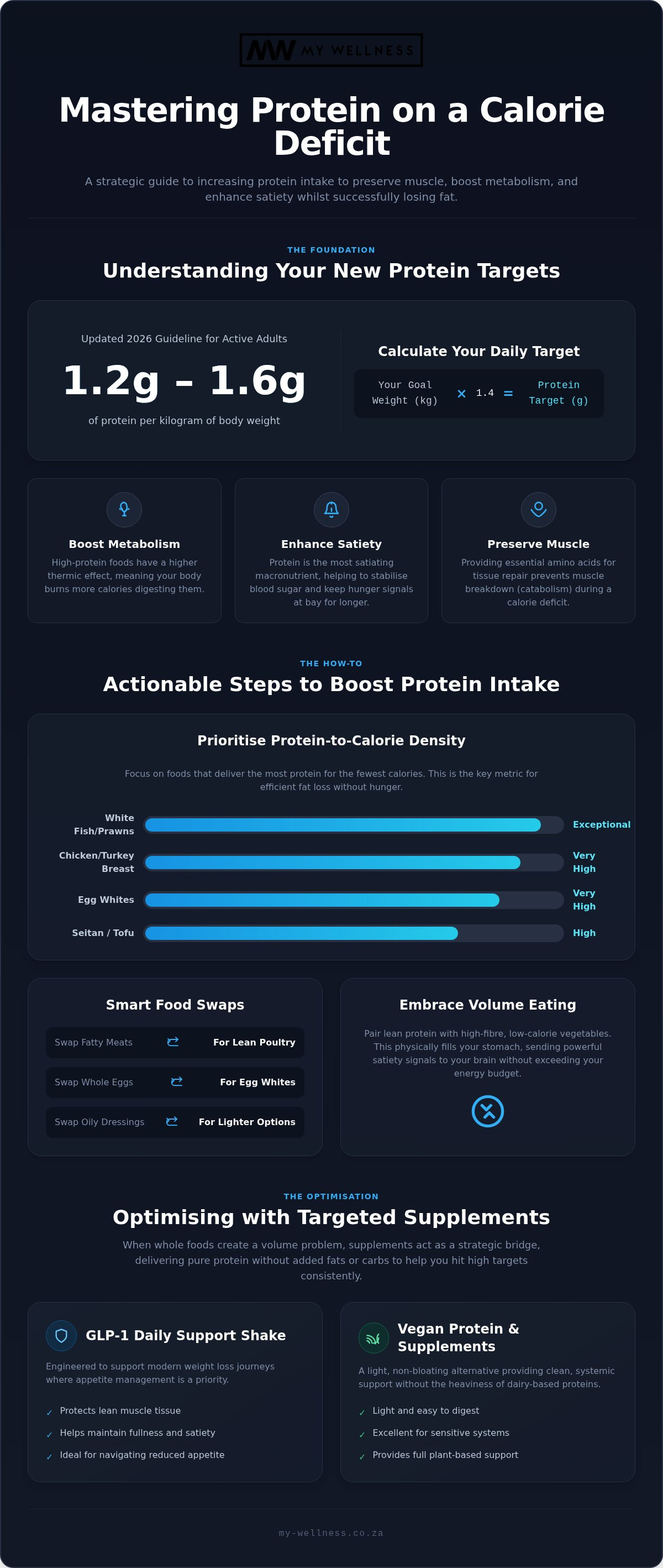
The 2026 dietary guidelines suggest a significant shift in our approach. Experts now recommend 1.2 to 1.6 grams of protein per kilogram of body weight for active adults. To find your target, multiply your goal weight in kilograms by 1.4 for a balanced middle ground. This ensures you're hitting the "satiety per calorie" sweet spot. By choosing foods that offer the most fullness for the fewest calories, you make your deficit feel effortless. High-protein foods also boast a high thermic effect, meaning your body burns more energy just trying to digest them compared to fats or carbohydrates.
Preserving Lean Muscle Mass Whilst Losing Fat
High protein intake creates a biological muscle-sparing effect. It provides the necessary amino acids to repair tissue even when total energy is low. Beyond structure, protein is the most satiating macronutrient. It stabilises blood sugar and keeps hunger signals at bay for hours. Adopting a high-protein diet isn't just about growth; it's about protection and systemic support. The protein-to-calorie ratio is the ultimate metric for your fat loss success.
5 Actionable Steps to Boost Protein Intake Daily
Hitting your targets shouldn't feel like a chore. The secret is to front-load your day. Prioritise protein at every meal to stabilise blood sugar and crush mid-afternoon cravings. When you understand how much protein to eat to lose weight, you can begin to use the protein-to-calorie ratio as your primary decision-making tool. This metric ensures you're getting the most nutritional "bang" for your limited calorie buck. It's the most effective way to master how to increase protein intake on a calorie deficit whilst staying lean.
Start by incorporating egg whites into your morning routine. They're a pure, low-calorie protein booster that adds volume without the heavy fats found in whole eggs. For lunch and dinner, embrace "volume eating" by pairing lean animal sources or high-purity vegan alternatives with high-fibre, low-calorie vegetables. This fills your stomach physically, sending satiety signals to your brain without exceeding your energy budget.
Smart Food Swaps and Volume Eating Hacks
Identify high-calorie traps like fatty cuts of meat or oil-heavy dressings and swap them for nutrient-dense options. When you're figuring out how to increase protein intake on a calorie deficit, these swaps become non-negotiable. For a mid-day lift, try sipping on premium bone broths. They offer a savoury, high-protein snack profile with minimal calories. Focus on these top-tier sources for maximum efficiency:
- White Fish and Prawns: Exceptional protein-to-calorie density.
- Chicken Breast and Turkey: The gold standard for lean animal protein.
- Seitan and Tofu: Versatile, high-purity vegan staples.
- Egg Whites: The ultimate low-calorie binder and booster.
Optimising Your Intake with Targeted Supplements
Whole foods are the foundation, but hitting high targets on a restricted energy budget often creates a volume problem. If you're struggling with how to increase protein intake on a calorie deficit, supplements act as a strategic bridge. They deliver pure protein without the added fats or carbohydrates found in many whole food sources. This precision allows you to hit your numbers whilst keeping your total energy intake low. Quality matters here. Low-grade powders often cause digestive distress or bloating, which can derail your consistency and comfort.
Scientific research, such as the Clinical Evidence and Mechanisms of High-Protein Diet-Induced Weight Loss, confirms that high protein intake preserves lean mass and enhances satiety. Integrating these tools into your daily routine is the smartest way to master how to increase protein intake on a calorie deficit without feeling overwhelmed. Choosing nutrient-dense supplements ensures your body remains supported even in a deep deficit.
Integrating GLP-1 Support and Protein Shakes
Our GLP-1 Daily Support Shake is specifically engineered to protect your muscle tissue and maintain fullness. It's an ideal solution for those navigating modern weight loss journeys where appetite management is a priority. For those with sensitive systems, our Vegan Protein & Supplements offer a light, non-bloating alternative that feels clean and easy to digest. These plant-based options provide the same systemic support without the heaviness associated with traditional dairy proteins.
Don't overlook systemic support. Incorporating GLP-1 Muscle Protect Creatine helps maintain strength and cellular hydration during your workouts. Additionally, our Bone Broths provide a rich source of collagen-specific amino acids to support joint health and gut integrity. These targeted tools ensure your deficit is successful, sustainable, and entirely focused on high-quality outcomes.
Fuel Your Progress and Protect Your Muscle
You now have the definitive blueprint to navigate your fat loss journey with absolute precision. By calculating your specific 2026 protein targets and mastering the art of volume eating, you can maintain satiety whilst seeing visible results. Prioritising protein-to-calorie density ensures every meal works toward your goal. Integrating these smart habits and high-purity supplements is the most effective strategy for mastering how to increase protein intake on a calorie deficit without the usual hunger or fatigue.
It's time to bridge the nutritional gap with solutions designed for your modern lifestyle. Shop the My Wellness GLP-1 Support Range for ultimate deficit success and benefit from our scientifically formulated muscle protection. Voted South Africa’s leading natural wellness innovator, we're your dedicated partner in achieving a leaner, stronger physique. You've got the knowledge and the tools; now go and own your transformation.
Frequently Asked Questions
How much protein do I actually need on a calorie deficit?
You need between 1.2 and 1.6 grams of protein per kilogram of body weight to protect muscle mass. This range, updated for 2026, ensures your body doesn't enter a catabolic state while energy is low. For an 80kg individual, this equates to roughly 96 to 128 grams daily. Adjusting your intake based on activity levels helps you master how to increase protein intake on a calorie deficit effectively.
Can I eat too much protein whilst trying to lose weight?
It's difficult to overconsume protein because of its high satiety levels and thermic effect. While any excess energy can technically be stored as fat, protein's metabolic cost makes it the least likely macronutrient to cause weight gain. Focus on protein-to-calorie density to ensure you're meeting your goals without exceeding your daily energy budget. Balance remains the key to a sustainable and healthy transformation.
What are the best vegan protein sources for a calorie deficit?
Seitan, tofu, and pea protein isolates are the most efficient plant-based options for fat loss. These sources provide high amino acid profiles with minimal carbohydrate or fat content. Utilising high-purity Vegan Protein & Supplements allows you to hit targets without the digestive heaviness of whole legumes. This approach is essential for anyone learning how to increase protein intake on a calorie deficit whilst following a plant-based lifestyle.
Is it better to get protein from whole foods or shakes?
A combination of both offers the best results for muscle preservation and convenience. Whole foods like white fish or egg whites provide essential micronutrients and physical fullness. However, shakes like the GLP-1 Daily Support Shake are invaluable when your calorie budget is tight and food volume feels too high. They provide a pure, concentrated dose of nutrition that bridges the gap between your main meals.