


What if the weight you're losing isn't actually the fat you want to see gone? It's a thrill to watch the scales drop rapidly. You've worked hard for that progress. However, quick success often hides a metabolic thief. You might feel unusually weak or notice sagging skin whilst your gym performance stalls. These are classic signs of muscle wasting on ozempic that many overlook until it impacts their metabolism.
You deserve a body that feels as strong as it looks. We'll show you how to spot early warning signs of lean mass loss before they affect your daily life. You'll learn the exact nutritional strategies and targeted support needed to protect your muscle whilst losing fat. We're providing a practical plan to keep your strength high and your transformation on track throughout 2026.
Key Takeaways
- Identify the early visual and functional signs of muscle wasting on ozempic to stop metabolic decline before it starts.
- Uncover the biological reason why rapid weight loss often triggers "anabolic resistance" and how to counteract it effectively.
- Learn the exact protein-first eating protocols required to protect your lean mass whilst maintaining a significant calorie deficit.
- Discover why specific movement patterns are mandatory to preserve your strength and avoid the "Ozempic butt" phenomenon.
Recognising the Physical Signs of Muscle Wasting on Ozempic
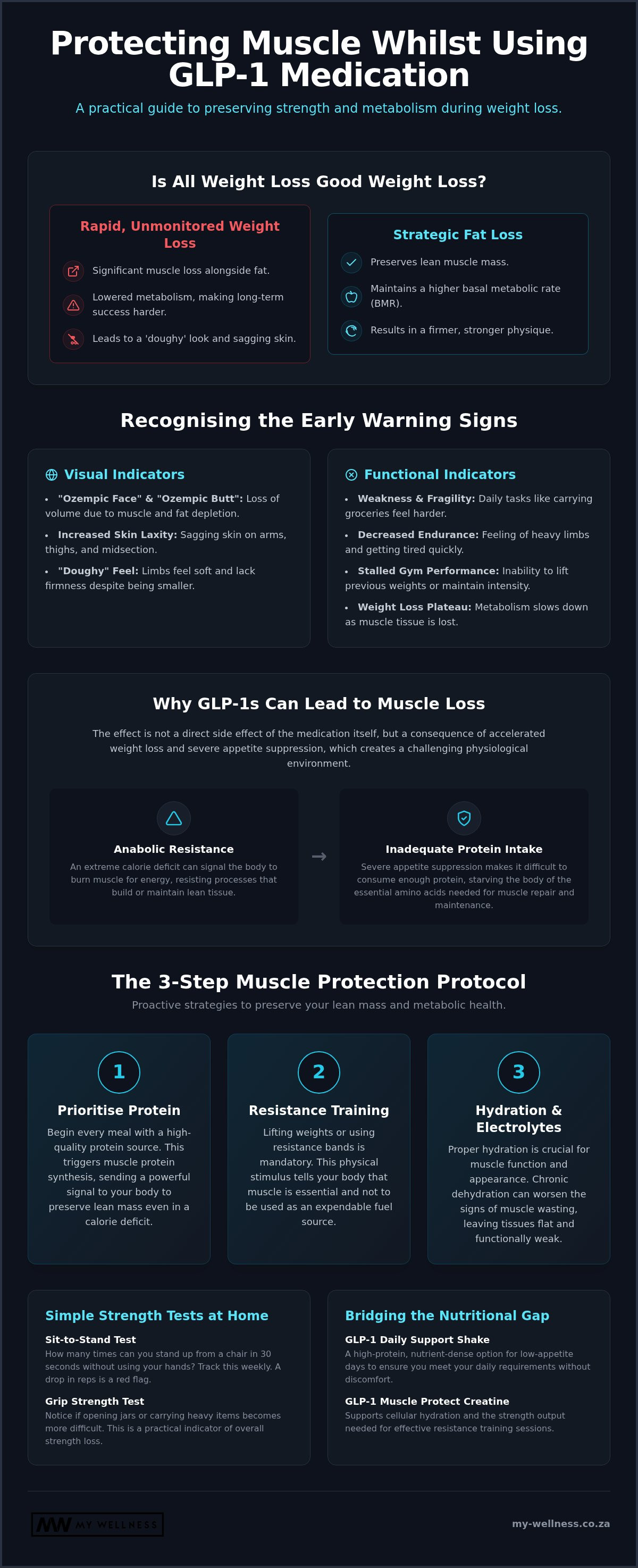
Rapid weight loss can be deceptive. While the scale shows progress, your mirror and your body's performance often tell a different story. "Ozempic Face" and "Ozempic Butt" are visible indicators that your body is stripping away both fat and essential muscle scaffolding. Without muscle providing structural support, you'll likely notice increased skin laxity and sagging amongst your arms, thighs, and midsection whilst the scale drops.
Physical signs of muscle wasting on ozempic often manifest as a "doughy" or soft feeling to the limbs. You're smaller, but you aren't firmer. Research into Semaglutide, including a 2024 systematic review, confirms that while the ratio of lean mass can improve, many users experience significant absolute decreases in lean body mass. This loss of metabolic currency makes it harder to maintain your results long-term.
Functional vs Visual Indicators of Lean Mass Loss
Your body's ability to perform is the ultimate diagnostic tool. If carrying groceries or climbing stairs feels harder than it did 10 kilograms ago, you're losing power. Sarcopenia in this context is medication-induced lean mass depletion. It's a "frailty" sensation where you feel light but lack the strength to move effectively. You might feel physically fragile despite the smaller clothing size.
Watch for these functional red flags:
- A sudden weight loss plateau caused by a metabolic slowdown as muscle tissue disappears.
- Decreased endurance and a sense of heavy limbs during routine daily tasks.
- A noticeable drop in the weights you can lift or the intensity of your gym sessions.
Protecting your metabolism requires early intervention. Recognising these shifts allows you to adjust your strategy before your basal metabolic rate takes a permanent hit. Don't ignore the feeling of weakness; it's your body's signal that it needs more support.
Why GLP-1s Cause Muscle Loss and How to Assess It
Understanding the biology of weight loss is vital for long-term health. While these medications are revolutionary, they often trigger a state of "anabolic resistance". When your body faces an extreme calorie deficit, it prioritises survival by burning muscle tissue for energy. The Cleveland Clinic explains it's related to losing weight at an accelerated pace rather than a direct side effect of the chemical itself.
Severe appetite suppression and delayed gastric emptying create a unique challenge. You simply don't feel like eating. When you do eat, you feel full almost instantly. This often leads to inadequate protein intake. Without enough amino acids, your body cannot repair or maintain lean mass. This is a primary driver of the signs of muscle wasting on ozempic. Losing this tissue isn't just about aesthetics. It lowers your Basal Metabolic Rate (BMR). This makes future weight maintenance incredibly difficult. Distinguishing between healthy weight loss and dangerous wasting is essential for a sustainable transformation.
Simple Strength Tests to Perform at Home
Don't wait for a clinical scan to assess your progress. You can monitor your functional strength with basic movements. Try the Sit-to-Stand test: record how many times you can move from a seated position to standing in 30 seconds. A significant drop from your baseline is a major red flag. Similarly, pay attention to your grip strength. Struggling with jar lids or heavy handles suggests your "power" is fading. To bridge the nutritional gap, consider a GLP-1 Daily Support Shake to ensure your body gets the nutrients it needs whilst your appetite is low.
Proven Protocols to Stop Muscle Loss Whilst Using Ozempic
Stop the metabolic slide by taking proactive control of your physiology. You must prioritise protein-first eating. Every meal should begin with high-quality amino acids to trigger muscle protein synthesis effectively. This nutritional foundation is the most reliable way to preserve muscle mass on GLP-1 whilst navigating a significant calorie deficit. Don't leave your muscle health to chance when your appetite is suppressed.
Pair your nutrition with consistent resistance training. Lifting weights or using resistance bands sends a vital "keep" signal to your muscle tissues. Without this stimulus, your body will readily categorise muscle as expendable fuel. Additionally, stay vigilant about hydration and electrolyte balance. Many users mistake rapid water loss for fat reduction. Chronic dehydration can actually exacerbate the signs of muscle wasting on ozempic by leaving your tissues flat and functionally weak.
The Role of Targeted Nutrition and GLP-1 Support
Strategic supplementation bridges the gap when your appetite disappears. The GLP-1 Daily Support Shake provides a high-protein, nutrient-dense solution for those challenging low-appetite days. It ensures you meet your daily requirements without the discomfort of large meal volumes. We also recommend incorporating GLP-1 Muscle Protect Creatine. It's essential for maintaining cellular hydration and supporting the strength output required for effective resistance training sessions. For those seeking a tailored approach to their micronutrient needs, Zenutri Personalised Vitamins can help you maintain your nutritional foundation throughout your transformation.
Master Your Metabolic Transformation
You now have the tools to distinguish between simple weight loss and metabolic wasting. By monitoring functional strength and visual changes, you can catch the signs of muscle wasting on ozempic before they impact your long-term health. Success requires more than just a smaller number on the scale. It demands a proactive focus on high-quality protein and consistent resistance movement to signal your body to keep its essential muscle tissue.
Don't let low appetite compromise your metabolic health. Our expertly crafted range is specifically formulated for GLP-1 users. You can protect your lean mass with the My Wellness GLP-1 Daily Support Shake. This South African made solution includes essential vitamins and minerals often depleted during rapid weight loss to keep you feeling vibrant and strong. Take charge of your journey today. You have the power to build a body that's both leaner and more resilient.
Frequently Asked Questions
Is muscle loss on Ozempic permanent or can I gain it back?
Muscle loss is not permanent, but regaining it requires significantly more effort than maintaining it. You can rebuild lean tissue through progressive resistance training and surplus protein intake after your weight stabilises. However, it's far more efficient to prevent the initial signs of muscle wasting on ozempic by supporting your body with the right nutrients from day one. Consistency in lifting is vital.
How much protein should I eat daily whilst on GLP-1 medication?
You should aim for approximately 1.2 to 1.5 grams of protein per kilogram of body weight daily. This higher threshold is necessary to counteract the anabolic resistance and extreme calorie deficits often seen with GLP-1 use. Since appetite is low, using a GLP-1 Daily Support Shake helps you hit these targets without feeling overly full. It ensures your muscles have the amino acids needed for repair.
Can I take creatine whilst using Ozempic to protect my muscles?
Yes, taking creatine is a highly effective strategy to support your strength and cellular hydration. Our GLP-1 Muscle Protect Creatine is specifically designed to help maintain muscle fullness and power output during a deficit. It helps prevent sarcopenia by ensuring your muscle cells stay hydrated and ready for resistance training. This simple addition can significantly improve your physical performance and body composition results.
What happens if I lose too much muscle during my weight loss journey?
Losing excessive muscle leads to a significantly lower basal metabolic rate, making weight regain almost inevitable once you stop the medication. You may also experience physical frailty, increased skin sagging, and a "skinny fat" appearance. Recognising the signs of muscle wasting on ozempic early is vital to avoid these long-term metabolic consequences. Protecting your lean mass ensures you stay strong, healthy, and metabolically active.