


The biggest keto coffee trap is often in the extras, not the coffee itself. Three common mistakes when making keto coffee are adding sugar or sweeteners that contain carbohydrates, not blending in added fats, and pouring in more butter or ghee than intended. Bulletproof coffee is brewed coffee blended with fats such as butter or ghee, sometimes with MCT oil. These additions make a simple cup much richer.
That creamy, filling feel is part of the appeal, but keto-friendly ingredients still count. Sweeteners can add carbohydrates, while fats provide energy even when they contain little or no carbohydrate. This guide explains how to keep sweetness low, why blending matters for texture, and how to consider butter or ghee portions as part of your overall intake. The aim is a satisfying cup without hidden sugar or oversized servings working against your goals.
Key Takeaways
- Read ingredient labels for hidden sugars and sweeteners before adding flavour to your coffee.
- Blend added fats into the coffee for a smoother, frothier finish.
- Measure butter or ghee instead of pouring freely, and factor the serving into your daily intake.
- Build your cup around your goals: keep the flavour satisfying without letting extras outweigh the coffee itself.
1. Adding sugar and high-sugar sweeteners to keto coffee
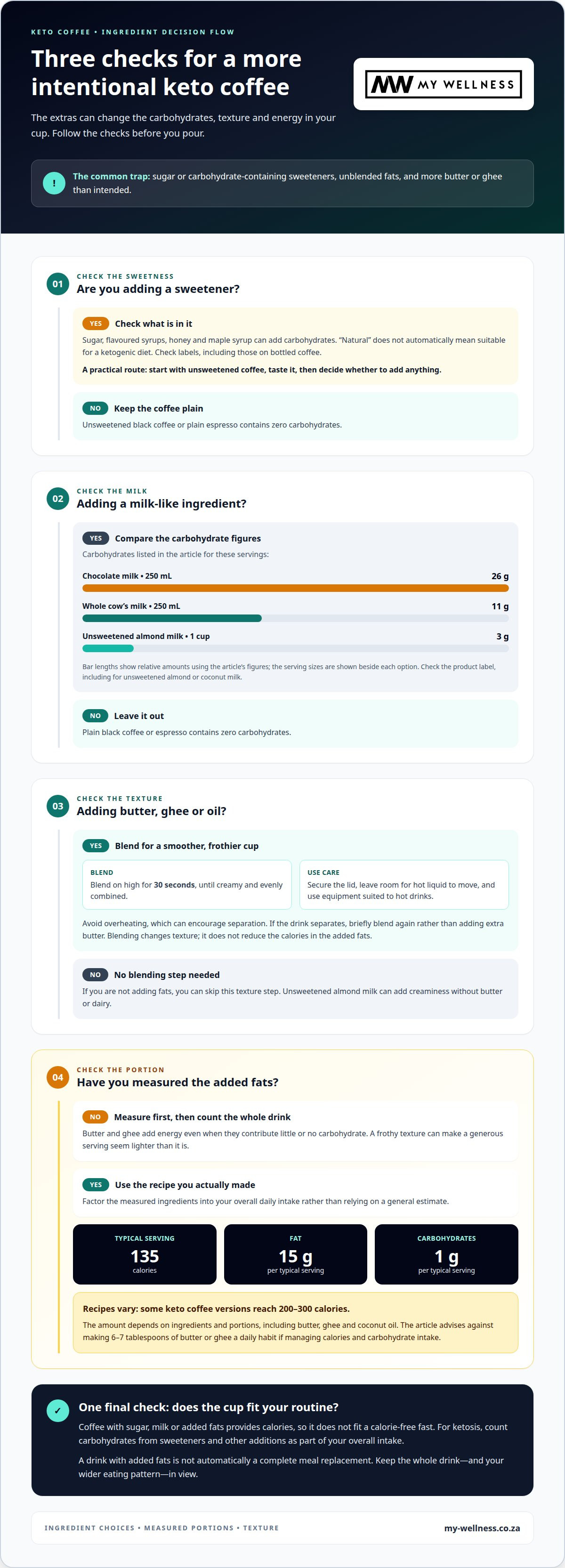
Sugar, flavoured syrups, honey and maple syrup can add carbohydrates to keto coffee. These additions may work against a low-carbohydrate approach, especially alongside other sweetened foods. Start with unsweetened coffee and taste it before adding anything.
Milk can also change the carbohydrate count. A 250 mL serving of whole cow’s milk contains 11 g of carbohydrates, while the same serving of chocolate milk contains 26 g. Unsweetened almond milk contains 3 g per cup. Read labels on bottled coffee, too: added flavours and milk can bring extra carbohydrates.
For a practical swap, use plain espresso or unsweetened black coffee, which contain zero carbs. For a milk-like addition, try unsweetened almond or coconut milk and check the label. “Healthy” sweeteners still count: honey and maple syrup are not automatically suitable for a ketogenic diet just because they are natural.
Does keto coffee affect fasting or ketosis? Coffee with sugar, milk or added fats provides calories, so it does not fit a calorie-free fast. For ketosis, the key concern is the carbohydrates in sweeteners and other additions, counted as part of your overall intake.
Is keto coffee a healthy meal replacement? No. Coffee with added fats provides energy, but may lack protein, fibre and the range of nutrients found in a balanced meal. Adding butter, for example, does not make coffee equivalent to a meal with protein and vegetables. Keto coffee may suit some routines, but it should not replace food needed to support health or manage a disease.
2. Blending fats for a frothy texture
Stirring butter or oil into coffee can leave a slick layer on top. Blending helps disperse the fats through the drink, creating a smoother texture rather than separate pockets of oil. For a frothy finish, blend the ingredients on high for 30 seconds, then pour carefully into your cup.
Secure the lid and leave room for the hot liquid to move. A handheld or countertop blender can work, but use equipment suited to hot drinks and follow its instructions. Avoid overheating the coffee, which can encourage separation and affect the texture. Blend only until the mixture looks creamy and evenly combined.
Texture is not a measure of nutrition. Butter and other added fats contribute calories whether they float on top or blend smoothly. If weight management is one of your goals, include the whole drink in your daily intake. A frothy cup can make a generous serving seem lighter than it is.
Choose each ingredient for a clear reason. Unsweetened almond milk can add creaminess, while butter or oil changes the drink’s fat content and mouthfeel. A ketogenic diet does not make every added ingredient automatically healthy. Blending does not add electrolytes; it simply combines the coffee and fats.
For a consistent result, measure each ingredient, add it to brewed coffee, and blend for 30 seconds. If the drink separates before you finish it, blend again briefly rather than adding extra butter. This keeps the texture smooth without turning a preparation issue into a larger serving.
3. Excess calories from butter or ghee in keto coffee
Butter and ghee can fit into keto coffee, but generous servings can add substantial energy. The fats make the drink more calorie-dense than plain coffee, even if it feels like just a drink. If weight loss is your goal, remember that ketosis does not make calories irrelevant. Consider the cup alongside what you eat, rather than treating it as calorie-free fuel.
A typical serving is listed at 135 calories, 15g of fat and 1g of carbohydrates. Other keto coffee recipes can reach 200-300 calories, mostly from fats. The difference depends on the ingredients and amounts, including butter, ghee and coconut oil. Measure before adding, and track the recipe you actually make instead of relying on a general estimate.
How many calories, fat and carbs are in a typical cup of keto coffee? One typical serving has 135 calories, 15g of fat and 1g of carbohydrates. Recipes vary, with some keto coffee versions reaching 200-300 calories.
More fat doesn’t automatically mean better energy or improved function. Avoid making a daily habit of 6-7 tablespoons of butter or ghee if you’re managing calories and carbohydrate intake. Start with a smaller measured amount, then decide whether it suits your routine. A low-carb diet still benefits from attention to total eating patterns, not just one drink.
How do you make keto coffee without butter or dairy? Use unsweetened black coffee, or add unsweetened almond or coconut milk for a creamier cup. Measure additions, especially when your recipe includes other fats.
Want a convenient option for your coffee routine? Explore keto coffee options and choose a cup that fits your approach to portions and daily intake.
My Wellness: GLP-1 Daily Support Shake
My Wellness GLP-1 Daily Support Shake is an option to explore if you’re looking beyond coffee for a supportive addition to your routine. Keto coffee can be adjusted by measuring its ingredients, but it isn’t a complete meal replacement. Choose products according to the role you want them to play in your day, and keep your overall nutrition in view.
If you enjoy keto coffee but want a convenient alternative, My Wellness also offers Bullet Proof Keto Coffee. Consider the product that best fits your routine and preferences, rather than adding more butter or ghee by habit. For a closer look at these options or help finding a suitable next step, contact My Wellness.
Make your next cup a more intentional choice
Shape your routine around what you need, whether that is a simple coffee ritual or broader nutrition support. The common mistakes when making keto coffee are easier to avoid when you pause before adding ingredients and consider how the drink fits into your day.
If you’re exploring options beyond coffee, My Wellness offers the GLP-1 Hydration Support Strawberry Lemonade and GLP-1 Muscle Protect Creatine alongside its GLP-1 Daily Support Shake. Choose what feels relevant to your routine, without expecting one product to replace balanced meals or personalised health advice.
Contact My Wellness for support as you consider your next step. Keep it simple, stay mindful of your choices, and build a routine that feels sustainable.
Frequently Asked Questions
What is Bulletproof Coffee?
Bulletproof coffee is brewed coffee blended with fats, commonly butter or ghee, and sometimes MCT oil. The result is richer than plain black coffee. Think of it as coffee with added fats, not a different brewing style. These additions provide energy, so consider how the drink fits your eating plan and whether you want extra richness or a frothy texture.
What are the most common mistakes when making keto coffee?
Common mistakes when making keto coffee include adding sugar or syrup, stirring in fats without blending, and using more butter or ghee than intended. To spot habits that are easy to overlook, note what you add each time. Check whether flavoured coffee, sweetened milk or an extra spoonful has crept into your routine, then adjust the recipe deliberately.
How much butter or MCT oil should you add to keto coffee?
A basic recipe uses 1 tablespoon of butter or ghee. If adding MCT oil, start with 1 teaspoon, increase by 1 teaspoon weekly, and keep the maximum at 1-2 tablespoons. These amounts offer a measured guide, not a target everyone needs. Use a spoon rather than pouring freely, especially when preparing more than one cup.
Should you blend keto coffee, and how can you prevent an oily separation?
Yes, blending helps disperse fats through the coffee, while stirring can leave an oily layer. Add the coffee and fats to a blender, secure the lid, and blend until the surface looks evenly creamy. Avoid overheating the drink, as excess heat can encourage separation. If it separates before you finish, briefly re-blend it for a more uniform texture.
Which coffee ingredients and sweeteners are keto-friendly?
Choose unsweetened black coffee or plain espresso, then add unsweetened almond or coconut milk for a softer taste. Unsweetened heavy cream is another option; use the recommended 1 tablespoon to 2 tablespoons for creaminess. Sugar, honey, maple syrup and sweetened flavourings add carbohydrates. For ready-made drinks and milk alternatives, read the ingredient list rather than relying on words such as “natural”.