


The best-tasting shake isn’t automatically the best choice for weight loss. The best protein powder for women's weight loss should provide at least 20 g of protein in no more than 130 calories per serving, with a flavour you’ll enjoy regularly. Whey can be a convenient option, while plant-based powders offer an alternative if you avoid dairy.
Flavour matters: a shake you enjoy is easier to include in your routine. You’ll learn how diet-focused protein differs from regular whey, what to consider when choosing a flavour, and how to compare a powder’s protein and calorie content. Then use a simple comparison to find an option that fits your diet and weight-loss approach.
Key Takeaways
- Compare whey and plant-based powders by protein per serving, ingredients and how well each fits your diet.
- Choose a flavour you’ll enjoy consistently, then consider how you’ll mix and use it.
- Assess protein alongside calories per serving to find an option suited to your weight-loss approach.
- Explore vegan protein and related support options to see which best fits your routine and preferences.
Differences between diet protein and regular whey
“Diet protein” describes a weight-loss focus, not a specific protein source. Compare nutrition, ingredients and serving size to see how each powder fits your dietary needs and protein intake.
Whey, isolate and hydrolysed whey
Regular whey is a milk-derived protein, and a scoop provides about 25 g of protein. Whey isolate is another whey option; hydrolysed whey is processed into smaller protein fragments. These types differ in processing, ingredients and texture, so compare their labels rather than assuming “diet” means fewer calories. For women trying to manage weight, whey can be a convenient protein source alongside meals and strength training.
Whey, casein and plant-based powders
Whey and casein both come from milk, while plant-based powders use sources such as peas or soy. Casein averages about 25 g of protein per serving. Some plant powders require multiple scoops to provide 15 g to 20 g of protein, so serving size matters. Plant-based supplements may suit a vegan or dairy-free dietary pattern; flavour and texture can also shape which option works in a shake.
| Option | Protein per serving | Source and practical consideration |
|---|---|---|
| Regular whey | About 25 g | Milk-derived; versatile for shakes |
| Whey isolate | Compare label | Whey option; review ingredients |
| Hydrolysed whey | Compare label | Processed whey; check serving details |
| Casein | About 25 g on average | Milk-derived; compare texture |
| Plant-based | Some need multiple scoops for 15 g to 20 g | Plant protein sources; check serving size |
Choose by comparing the protein per serving and ingredients on the label with your dietary preferences and routine.
During pregnancy or breastfeeding, or if you have a medical condition, a protein powder isn’t automatically suitable. Ingredients and individual needs matter, so discuss supplements with your healthcare professional before adding one.
What protein powder flavours are best?
Choose a protein powder for women's weight loss with a flavour you’ll enjoy in water or blended into breakfast. In a small study, older women eating a high-protein breakfast consumed up to 135 fewer calories later than women who ate a low-protein breakfast or skipped it. More than 35 g of protein at once appears most effective for fullness and reduced appetite.
Compare the nutrition panel, not flavour names alone. Protein accounts for roughly 20-30% of its calories being burned during digestion. Look for powders with 120 to 130 calories per serving, then compare protein, carbohydrate and fat amounts. Mixing a serving with 200 ml of whole milk adds approximately 100-150 calories, so your liquid choice changes the total.
In South Africa, protein powder is available through supplement retailers and online stores. Prices vary by product and serving size, so compare cost per serving rather than tub price, alongside calories and macronutrients. A diet-focused powder may fit calorie-controlled eating, but a shake isn’t automatically a meal replacement. Consider whether it provides the nutrition you expect from that meal.
Use a shake to fill a gap in your daily protein intake, such as after a workout or alongside a meal that needs more protein. A protein powder for women's weight loss can be whey or plant-based; choose a source and flavour you prefer. Compare serving size, calories, protein, ingredients and allergen information on the label. A chocolate or vanilla shake mixed with water differs nutritionally from one blended with milk, fruit or other ingredients.
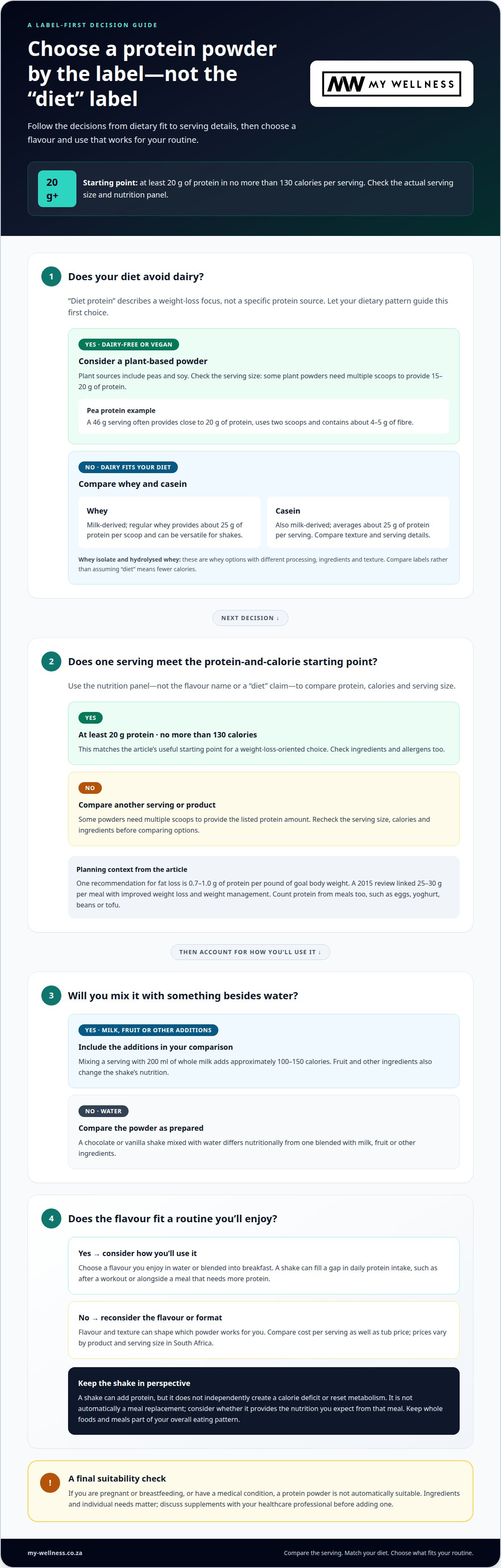
Protein powders and weight-loss-oriented product choices
Choosing a protein powder for women's weight loss starts with the serving, not a “diet” label or flavour promise. A useful starting point is at least 20 g of protein in no more than 130 calories. Compare that target with your usual meals, then use a shake to fill a gap rather than replace whole foods by default. A shake can add protein; it doesn’t independently create a calorie deficit or reset metabolism.
Protein needs depend on body weight and goals. One recommendation for fat loss is 0.7-1.0 g of protein per pound of goal body weight. A 2015 review linked 25-30 g per meal with improved weight loss and weight management. Treat those figures as planning references, then account for protein from meals such as eggs, yoghurt, beans or tofu.
Consider the protein source and what the powder contains. Whey provides a complete protein, while pea powder can add fibre: a serving contains about 4-5 g. A 46 g serving of pea protein often provides close to 20 g of protein and uses two scoops. That larger serving may affect how you mix it and fit it into your daily intake.
- Compare: protein, calories, serving size and ingredients.
- Match: the source to your dietary pattern and preferred flavour.
- Use: a shake where it helps meet your target alongside whole foods.
A 12-week study found women with moderate weight and high body fat lost an additional 3 lb (1.4 kg) of body fat on a high-protein diet. A protein powder for women's weight loss can support your routine, but choose a sustainable approach, not a strict plan built around shakes alone.
My Wellness: Vegan Protein & Supplements
My Wellness is a natural next step if you’re matching a protein choice to your dietary preferences and daily routine. Vegan Protein & Supplements offers a plant-based option to explore. The range also includes GLP-1 Daily Support Shake, GLP-1 Hydration Support Strawberry Lemonade and GLP-1 Muscle Protect Creatine. These are distinct products, so choose according to what you’re looking to add rather than treating them as interchangeable protein powders.
Start with your nutrition priorities: compare serving information and ingredients with your needs, then decide whether protein or another supplement fits your routine. If you prefer plant-based products, explore My Wellness Vegan Protein & Supplements. For hydration or creatine, consider the relevant My Wellness product. Keep whole foods and meals as part of your overall eating pattern.
Contact My Wellness to discuss which offering best matches your preferences.
Make your next choice work for you
Let the routine you can maintain guide your next decision. A protein powder for women's weight loss should have a clear role in your day, rather than becoming the focus of every meal. Decide what you want it to support, then consider whether preparing and enjoying it fits your habits. This practical test can help you move from comparing options to making a sustainable choice. Keep your approach flexible as your preferences and routine change. Progress comes from repeatable choices, not pressure to make every day perfect.
If you’d like support choosing a suitable option from the available wellness range, contact My Wellness for support. Take the next step at your own pace and choose a routine that feels achievable.
Frequently Asked Questions
What are the different protein sources to choose from?
Common protein sources include whey and casein from milk, as well as plant proteins such as pea and soy. Choose a source that suits your dietary pattern. For example, someone following a vegan diet may prefer pea or soy protein, while someone who eats dairy may choose whey or casein. Read the ingredients and allergen information before deciding.
Which type of protein is best for protein shakes?
Whey can be a straightforward shake option if dairy suits your diet. If you prefer a vegan option, look for a plant-based powder such as pea or soy protein. Neither source is automatically best for everyone. Choose one that fits your dietary needs, tastes good in your usual shake and helps you add protein without overlooking the ingredients.
How much protein do you need for fat loss?
A planning range for fat loss is 0.7-1.0 g of protein per pound of goal body weight. Use your goal weight to estimate a daily target, then count protein from meals as well as shakes. A powder can help fill an intake gap, but it needn’t become the main source of protein in your eating routine.
How much protein do women need?
Women need at least 0.8 g of protein per kilogram of body weight to support essential physiological functions. Research suggests 1.2-2.0 g per kilogram can support muscle recovery, athletic performance and overall wellbeing. These ranges reflect different aims. Consider activity and daily eating habits when deciding where your needs may sit.
How much protein per serving do I need?
Around 20 g is a general benchmark for protein powder, whilst a target of 25-30 g per serving may suit some weight-management plans. Check the amount provided by the labelled serving, not just the scoop size. Then account for protein in meals, such as yoghurt, eggs, tofu or beans, so the shake complements your daily intake.