


What if a stubborn scale is asking for a review, not a harsher diet? A few unchanged weigh-ins can feel discouraging, especially when you’ve been consistent, but short-term fluctuations don’t always signal a genuine plateau. A practical approach to dealing with a weight loss plateau starts with looking at the trend and your routine, not cutting meals or piling on workouts.
This guide explains how to recognise when progress may have stalled, what to review before changing your approach, and when personalised advice from a qualified health professional could help. You’ll find practical ways to look at your eating and activity habits, account for routine changes and choose a sensible next step without adding another conflicting rule to follow.
Key Takeaways
- Look for a sustained change in your weight trend, not a few different scale readings. Fluid shifts and measurement conditions can affect the number.
- When dealing with a weight loss plateau, review food and drink patterns, activity, sleep, stress and routine changes before making adjustments.
- Track habits in a realistic, non-judgemental way, and choose an approach that feels manageable rather than obsessive.
- Seek personalised clinical advice for persistent concerns, symptoms or medication questions. Never change prescribed GLP-1 medication without speaking to your prescriber.
Why weight loss plateaus happen, and what the scale can miss
Weight change isn’t perfectly linear. As your body weight and routine change, your energy needs may shift too. That can influence the pace of progress, but it doesn’t explain every stall. Eating patterns, activity, sleep, stress, health and some medicines may also affect the picture.
The scale captures more than body fat. Fluid balance, digestion, a salty meal, a change in routine or weighing at a different time can all move the number temporarily. A higher reading after one day doesn’t prove that your habits have stopped working. Look for a pattern before making changes.
Is it a true plateau or a short-term fluctuation?
A plateau is a sustained period with little or no change in the weight trend, rather than a few days of ordinary scale variation. There’s no single timeframe that applies to everyone, so review several weeks of readings alongside whether your routine has been consistent.
For a clearer comparison, use the same scale and weigh at a consistent time in similar clothing. If weighing feels stressful or isn’t suitable for you, you don’t have to track this way. A healthcare professional can help you choose an appropriate approach.
Clothing fit, energy and everyday function can add useful context, but they don’t diagnose what’s happening or replace health advice. If the trend is unclear, pause before cutting food or adding punishing workouts. Dealing with a weight loss plateau starts with checking what the evidence actually shows, then reviewing your routine thoughtfully.
Dealing with a weight loss plateau: a step-by-step routine review
Before changing your plan, check what’s happening across your routine. The aim is to spot a realistic adjustment, not to find fault or overhaul everything at once. For example, if a new schedule has reduced your usual walks or made meal preparation harder, that change may be more useful to address than a single scale reading.
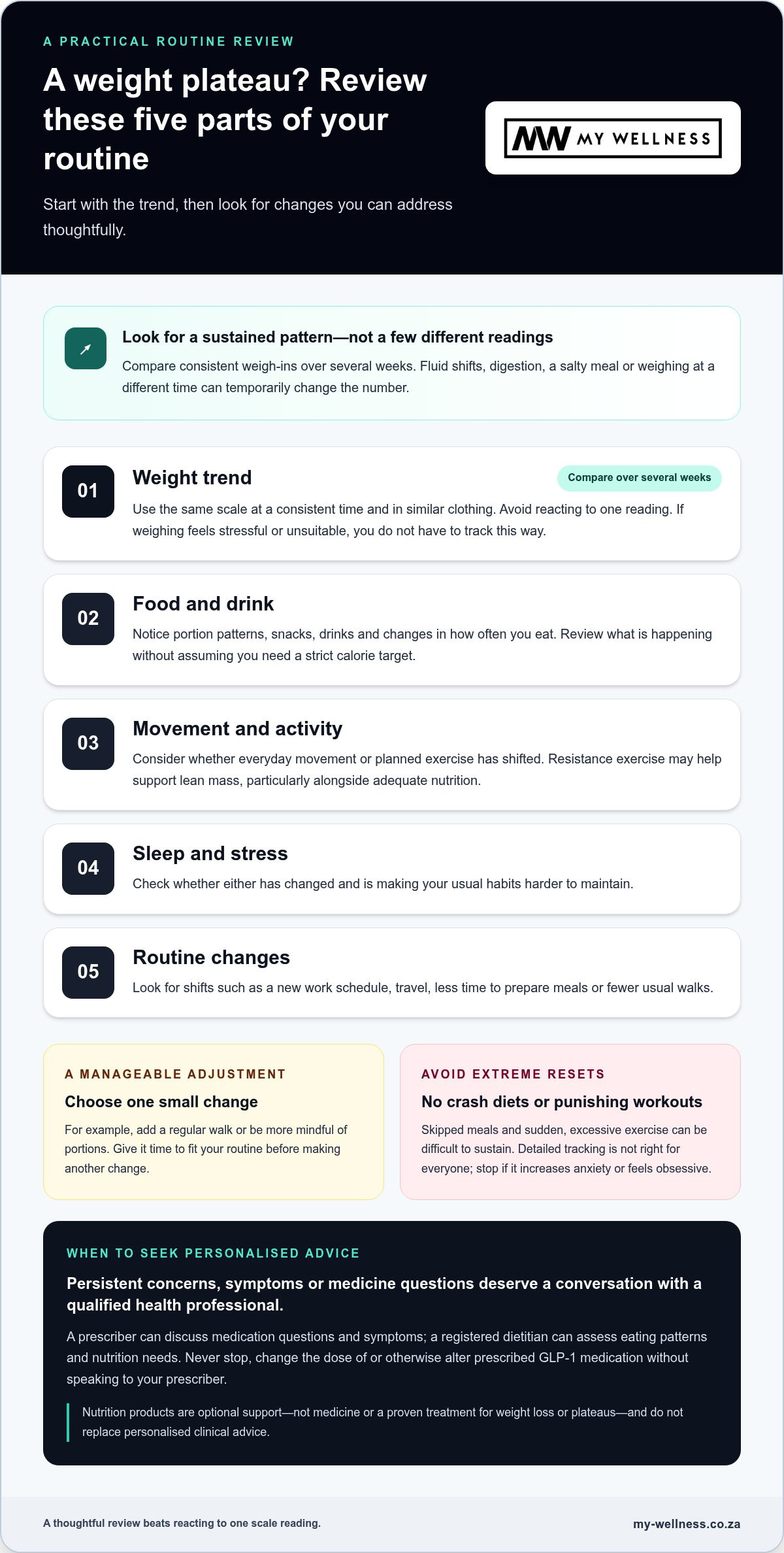
Start with the trend, then review your portions, drinks, movement, sleep, stress and routine changes before deciding what to adjust.
- Trend: Compare consistent weigh-ins over several weeks, rather than reacting to one reading.
- Food and drink: Notice portion patterns, snacks, drinks and changes in how often you eat. Don’t assume you need a strict calorie target.
- Activity: Consider whether everyday movement or planned exercise has shifted. Resistance exercise may help support lean mass, particularly alongside adequate nutrition.
- Sleep and stress: Check whether either has changed and is making your usual habits harder to maintain.
- Routine: Look for changes such as a new work schedule, travel or less time to prepare meals.
Short notes can help reveal patterns. You might record a change in your schedule, activity or eating routine alongside the weight trend, rather than trying to document every detail. Detailed tracking isn’t right for everyone, though. If it increases anxiety or feels obsessive, stop and consider another way to review your habits. Mayo Clinic advice on overcoming plateaus also highlights reassessing habits and activity before making changes.
What can you adjust safely before changing your plan?
Choose one manageable step, such as adding a regular walk or being more mindful of portions. Give yourself time to see whether it fits your routine before making another change. Avoid crash diets, skipped meals and sudden, excessive exercise, which can be difficult to sustain. If you’re considering optional nutrition support, My Wellness offers the GLP-1 Daily Support Shake. It isn’t medicine or a proven way to break a plateau.
When to seek help, and how nutrition support fits into the next step
If your weight trend remains concerning despite a consistent routine, or you’re experiencing symptoms, speak with an appropriate healthcare professional. They can consider your health, medicines and individual circumstances rather than assume the scale tells the whole story. If you have questions about a prescribed weight-management medicine, raise them with the prescriber who oversees your care.
Don’t stop, change the dose of or otherwise alter prescribed GLP-1 medication without speaking to your prescriber. A stall alone isn’t a reason to change treatment. Share what you’ve noticed and ask what next steps are suitable for you.
How can a healthcare professional or nutrition product support your next step?
A prescriber can discuss medication questions, symptoms and whether your treatment needs review. A registered dietitian can help assess your eating patterns and nutrition needs, then offer tailored guidance that works with your health and routine. These roles are different, and nutrition products don’t replace either kind of care.
As part of dealing with a weight loss plateau, consider whether a nutrition product fits your needs, especially if you have a health condition, take medicines or have specific dietary requirements. Discuss suitability with a qualified professional where relevant, and review the product label rather than assuming it will address a plateau.
The GLP-1 Daily Support Shake is an optional nutrition-support product, not a medicine or a proven treatment for weight loss or plateaus. It may be one consideration within your wider nutrition routine, but it can’t replace personalised clinical advice. Explore the GLP-1 Daily Support Shake.
Take your next step with confidence
Dealing with a weight loss plateau starts with perspective: one scale reading isn’t the whole story, and a steady review of your habits is more useful than an extreme reset. Look at the trend, consider changes to your routine and make small adjustments you can sustain. If concerns persist, symptoms arise or you have questions about prescribed medication, speak with a qualified health professional. Never change prescribed GLP-1 medication without your prescriber.
Nutrition support can be one optional part of your wider routine, not a treatment or guaranteed way to change your weight. My Wellness offers the GLP-1 Daily Support Shake and other wellness nutrition products online across South Africa. Explore the product as one possible part of your nutrition routine, alongside advice suited to your needs.
Keep your next step practical, personal and grounded in care. Progress doesn’t have to be rushed to be meaningful. Explore the GLP-1 Daily Support Shake.
Frequently Asked Questions
How long does a weight loss plateau usually last?
There’s no set duration that applies to everyone. A few days of unchanged weight may reflect normal fluctuations, not a sustained stall. Some descriptions define a plateau as two or more weeks without weight change despite consistent habits, whilst other guidance suggests reviewing your approach if a stall persists for three to four weeks. Look at the longer-term trend rather than treating these timeframes as strict rules.
Should I eat less when my weight loss stalls?
Not automatically. First review your usual portions, drinks and routine, then consider whether anything has changed. As body weight changes, energy needs may also shift, but cutting food sharply isn’t the only response and may be hard to maintain. Avoid skipping meals or crash diets. If you’re unsure what’s appropriate for your health or needs, seek personalised advice from a qualified health professional.
Can a weight loss plateau happen while taking GLP-1 medication?
Yes. Weight change can vary over time, including for people using prescribed GLP-1 medication. A stall doesn’t by itself show that your treatment has stopped working or needs a dose change. Discuss persistent concerns, symptoms or treatment questions with your prescriber. Don’t stop taking the medication or alter its dose without their guidance, even if the scale hasn’t moved as expected.
What should I do first when the scale stops moving?
Start by checking whether your weight trend has genuinely stalled. Compare readings taken in similar conditions over several weeks, if weighing is suitable for you, then review food and drink patterns, activity, sleep, stress and routine changes. Don’t respond to one reading with extreme restriction or excessive exercise. Dealing with a weight loss plateau is best approached with a calm review and sustainable next steps.