


The best natural supplements for energy and focus may be the ones that match what’s affecting you, not the trendiest label. Physical tiredness isn’t the same as difficulty concentrating, and a supplement may not address the cause of either. With bold claims everywhere, it’s worth checking which ingredients have credible evidence, what benefits are realistic and what risks or interactions to consider.
This 2026 guide compares common ingredients with an evidence-aware lens and explains the difference between energy support and focus support. You’ll also learn how to assess labels and when persistent tiredness or changes in concentration are a reason to seek professional advice rather than self-treat. Start by considering the cause, then decide whether a supplement is a suitable option.
Key Takeaways
- Compare natural supplements for energy and focus by their intended use and the strength of evidence, not just prominent claims.
- Learn how caffeine, L-theanine and creatine differ, and why B vitamins or iron may be most relevant when a deficiency is involved.
- Check the full ingredient label, count caffeine from all sources and follow product directions rather than guessing at a dose.
- Know when ongoing tiredness or difficulty concentrating calls for professional advice instead of self-treating with supplements.
Why energy and focus supplements depend on what is affecting you
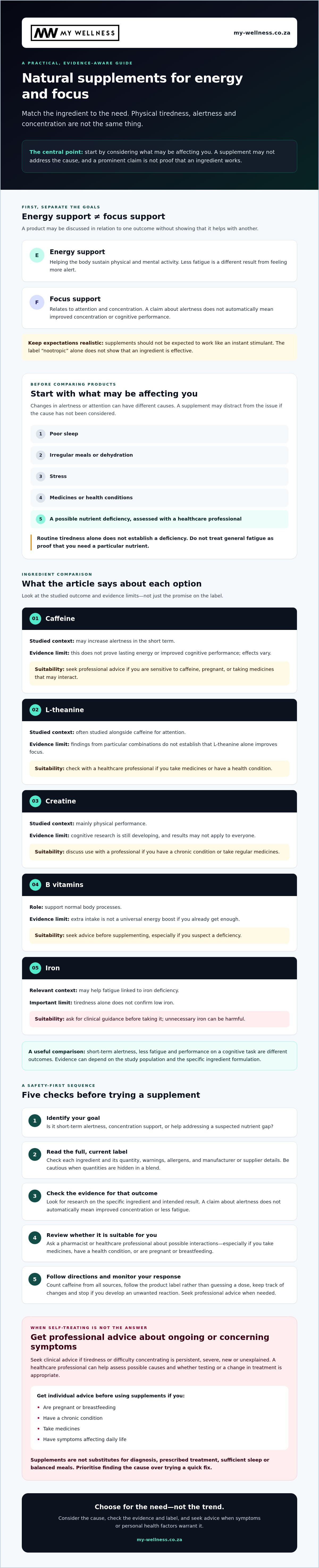
Energy and focus are related, but they aren’t the same goal. Energy support means helping the body sustain physical and mental activity; focus support relates to attention and concentration. Neither should be expected to work like an instant stimulant. Supplements marketed as nootropics are intended to influence cognitive function, but that label alone doesn’t show that an ingredient is effective.
Start by considering what may be behind the change. Poor sleep, irregular meals, dehydration and stress can affect alertness and attention. Medicines and health conditions may also contribute, so adding a supplement without checking the possible cause could mean missing the real issue. A nutrient deficiency is a specific lack of a nutrient that may be assessed by a healthcare professional. Routine tiredness alone doesn’t establish that one is present.
The practical takeaway is to match any supplement to a clear need. Don’t treat general fatigue as proof that you need a particular nutrient.
When persistent tiredness or poor concentration needs professional advice
Seek clinical advice if symptoms are persistent, severe, new or unexplained. A healthcare professional can help assess possible causes and whether testing or a change in treatment is appropriate. Supplements aren’t substitutes for diagnosis, prescribed treatment, sufficient sleep or balanced meals.
Get individual advice before using supplements if you’re pregnant or breastfeeding, have a chronic condition, or take medicines. Ingredients can have side effects or interact with treatment, and what suits one person may not suit another. If symptoms are affecting daily life, prioritise finding the cause over trying a quick fix.
Natural supplements for energy and focus: ingredients to compare
Compare the outcome being studied, not just the promise on the label. Feeling more alert, experiencing less fatigue and performing better on a cognitive task are different results. Evidence may also depend on the study population and the specific ingredient formulation. Harvard Health on brain supplements offers a useful caution: broad brain-health claims don’t guarantee strong evidence for a product.
| Ingredient | Studied context and evidence limits | Who should seek advice |
|---|---|---|
| Caffeine | May increase alertness in the short term. This doesn’t prove lasting energy or improved cognitive performance, and effects vary. | Ask a healthcare professional if you’re sensitive to caffeine, pregnant, or taking medicines that may interact. |
| L-theanine | Often studied alongside caffeine for attention. Findings from particular combinations don’t establish that L-theanine alone improves focus. | Check suitability if you take medicines or have a health condition. |
| Creatine | Studied mainly for physical performance, with cognitive research still developing. Results may not apply to everyone. | Discuss use with a professional if you have a chronic condition or take regular medicines. |
| B vitamins | Support normal body processes, but extra intake isn’t a universal energy boost if you already get enough. | Seek advice before supplementing, especially if you suspect a deficiency. |
| Iron | May help fatigue linked to iron deficiency; tiredness alone doesn’t confirm low iron. | Ask for clinical guidance before taking it, as unnecessary iron can be harmful. |
Iron and B vitamins aren’t universal energy boosters. Consider them in light of your diet, health and possible deficiency, rather than as a default fix. If you’re comparing products, review My Wellness supplement options and check the current labels. Don’t assume a product supports energy or focus unless its ingredients and evidence substantiate that claim.
How to choose and use an energy and focus supplement safely
Use this sequence before trying any natural supplements for energy and focus. It helps keep the decision grounded in your needs rather than a bold label claim.
- Identify your goal. Are you looking for short-term alertness, support for concentration, or help addressing a suspected nutrient gap?
- Check the current label. Review each ingredient and its quantity, plus warnings, allergens and manufacturer or supplier details. Be cautious if quantities are hidden in a blend.
- Assess the evidence. Look for research on the specific ingredient and intended outcome. A claim about alertness doesn’t automatically mean improved concentration or less fatigue.
- Review suitability. Ask a pharmacist or healthcare professional about possible interactions, especially if you take medicines, have a health condition, or are pregnant or breastfeeding.
- Monitor your response. Follow the product label, keep track of any changes and stop taking it if you develop an unwanted reaction. Seek professional advice if symptoms persist or worsen.
What to check before trying a supplement
Count caffeine from all sources, including coffee, tea, cola, energy drinks and supplements. Check the amount on each label and follow the product directions. Don’t guess a dose or combine products without checking their ingredients together. If caffeine affects your sleep or makes you feel unwell, seek advice before continuing.
For South African products, check applicable classification, labelling and permitted claims against current official requirements. Don’t assume a wellness claim proves a product is suitable or effective. My Wellness offers products including vegan protein and a GLP-1 Daily Support Shake, but consider them relevant to energy or focus only if the current product label and supporting evidence substantiate that connection. Review My Wellness wellness products with that in mind.
Choose your next step with confidence
The best natural supplements for energy and focus depend on your goal and what may be affecting you. Alertness, fatigue and concentration are different outcomes, so weigh the evidence for the specific ingredient rather than relying on broad claims. Check the label, count caffeine from all sources and ask a healthcare professional about persistent symptoms, medicines or health conditions.
Build your foundation with balanced meals and enough sleep, then consider supplements thoughtfully. My Wellness is a South African online wellness brand offering products such as Bullet Proof Keto Coffee and vegan protein. Their relevance to energy or focus depends on the current label and supporting evidence, so check both before choosing.
Explore the My Wellness range and take your next step with care. Start with a clear goal, compare the label with the evidence and choose accordingly.
Frequently Asked Questions
Do natural supplements really help with energy and focus?
Some may help with specific outcomes, but effects depend on the ingredient, the person and the reason for feeling tired or unfocused. Caffeine may support short-term alertness, for example, but that doesn’t mean it treats fatigue or improves every aspect of concentration. Natural supplements for energy and focus aren’t a substitute for sleep, balanced meals or investigating persistent symptoms with a healthcare professional.
Can I take caffeine and L-theanine together for focus?
Some research has examined caffeine and L-theanine together for attention, but findings from particular studies don’t guarantee a noticeable benefit for everyone. Check the caffeine amount in the product and count other sources, such as coffee, tea and energy drinks. Ask a pharmacist or healthcare professional before combining them if you take medicines, have a health condition, or are pregnant or breastfeeding.
What supplements should I take for low energy?
There isn’t one supplement that suits everyone with low energy. Iron or B vitamins may be relevant if a deficiency is present, but feeling tired alone doesn’t confirm one. Consider sleep, food, hydration, stress and medicines, and seek clinical advice if fatigue is persistent, severe, new or unexplained. A professional can help assess the cause before you choose a supplement.
Are natural energy supplements safe to take every day?
Not necessarily. Daily suitability depends on the ingredients, amount, your health and any medicines you take. Follow the current product label, check warnings and allergens, and add up caffeine from all sources. Ask a pharmacist or healthcare professional about possible interactions, especially during pregnancy or breastfeeding or if you have a chronic condition. Stop and seek advice if you notice an unwanted reaction.