


What if the best bone broth routine isn’t the biggest serving, but one that fits your goals and feels comfortable day after day? If you’re asking, “how much bone broth should I drink daily?”, you’re right to look beyond a one-size-fits-all answer. A larger serving may affect digestive comfort or add to your sodium intake, and stock and bone broth aren’t always nutritionally alike.
There’s no official daily amount, but around 240 to 480 ml is a common starting range for general wellness. Your own serving depends on your goals, tolerance and how it fits into your diet. This guide covers practical serving amounts, timing and ways to make bone broth part of your routine without spending hours simmering bones.
Key Takeaways
- Wondering how much bone broth should I drink daily? Start with a standard mug, then adjust to your goals and tolerance.
- Bone broth contains collagen, gelatin and amino acids, while its nutrient profile can differ from ordinary stock.
- If your digestion is sensitive, begin with a smaller serving and check the label for added salt and sodium.
- Make the habit easier by adding broth to a savoury mug, soup or stew.
The Daily Baseline: How Much Bone Broth Should You Drink?
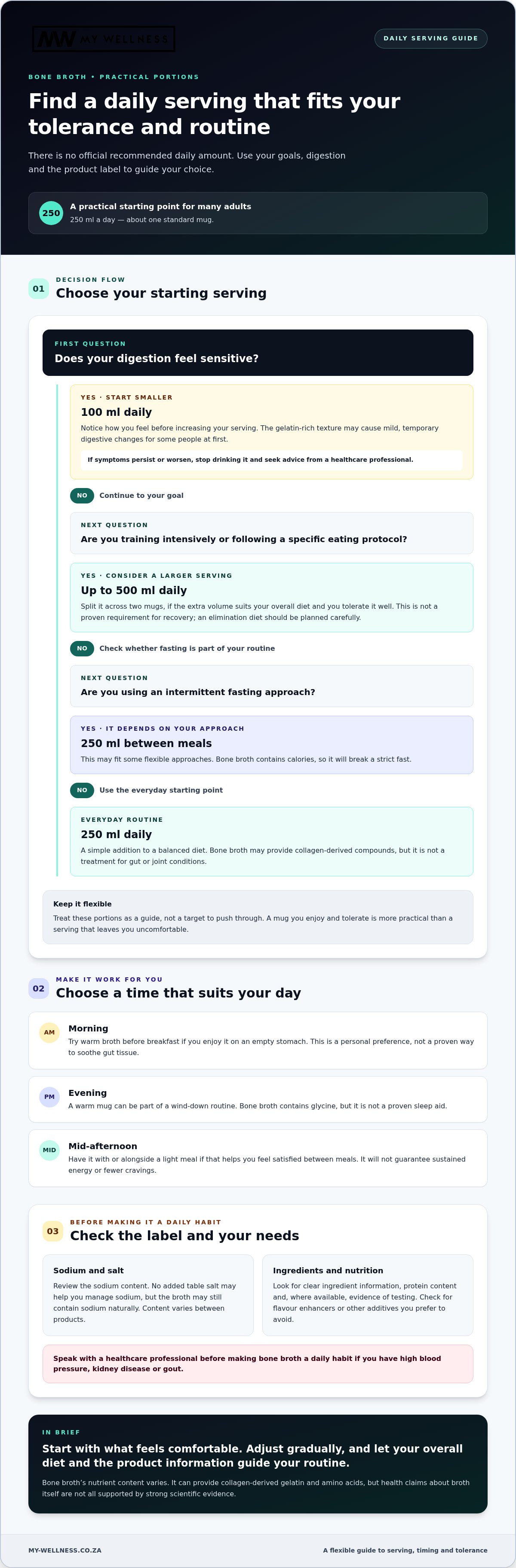
For many adults, 250 ml a day, about one standard mug, is a practical starting point. There’s no official recommended daily amount, so consider your goals, tolerance and the broth’s nutrition label. Bone broth is made by simmering bones and can provide collagen-derived gelatin and amino acids, although its nutrient content varies. For a balanced overview of what bone broth is, bear in mind that the term overlaps with stock, and health claims about broth itself aren’t all supported by strong scientific evidence.
So, how much bone broth should I drink daily? Start with one mug consistently rather than assuming a larger serving will bring greater benefits. If you’re active or following a specific eating protocol, you could increase your serving gradually, provided it suits your overall diet and you tolerate it well.
Recommended Daily Intake by Individual Wellness Goal
- Everyday routine: Try 250 ml daily as a simple addition to a balanced diet. It may contribute collagen-derived compounds, but it isn’t a treatment for gut or joint conditions.
- Intensive training or elimination protocols: Consider up to 500 ml daily, split across two mugs, if the extra volume suits you. This isn’t a proven requirement for recovery, and an elimination diet should be planned carefully.
- Intermittent fasting: A 250 ml mug between meals may fit some flexible approaches, but broth contains calories and will break a strict fast. Sodium content varies, so don’t treat it as a guaranteed way to maintain electrolyte balance.
Use these amounts as a flexible guide, not a target to push through. A mug you enjoy and tolerate is a more practical routine than a serving that leaves you uncomfortable.
Timing, Tolerance, and Potential Side Effects to Consider
If your digestion is sensitive, start with 100 ml daily and notice how you feel before increasing your serving. The gelatin-rich texture may cause mild, temporary digestive changes for some people at first. If symptoms persist or worsen, stop drinking it and seek advice from a healthcare professional.
Check both the nutrition label and the ingredients. Choosing a broth with no added table salt can help you manage sodium, although it may still contain sodium naturally. If you have high blood pressure, kidney disease or gout, speak with a healthcare professional before making bone broth a daily habit. For a balanced overview of the nutritional benefits of bone broth, remember that research on broth itself is more limited than research on individual nutrients such as collagen.
The Best Time of Day to Sip Your Daily Serving
There’s no single best time. Choose a moment that suits your routine and digestion:
- Morning: Try warm broth before breakfast if you enjoy it on an empty stomach. Treat this as a personal preference, not a proven way to soothe gut tissue.
- Evening: A warm mug can be a calming part of your wind-down routine. Bone broth contains glycine, but don’t rely on it as a proven sleep aid.
- Mid-afternoon: Sip it with or alongside a light meal if that helps you feel satisfied between meals. It provides nourishment, but won’t guarantee sustained energy or fewer cravings.
Wondering how much bone broth should I drink daily if you’re sensitive? Keep your smaller starting serving steady, track how you feel and adjust gradually. For an easy-to-prepare option, explore My Wellness bone broths as part of your routine.
Making Daily Bone Broth Effortless: Sourcing and Routine
A daily habit should fit your life, not require hours at the stove. Ready-to-use broth keeps preparation simple. Concentrated or powdered formats can also be stirred into a savoury mug, soup or stew, where they add a rich, warming base. Follow the product’s preparation instructions and count your serving towards the daily amount that suits you.
For consistency, choose a regular moment, such as lunch or an afternoon break. Try the routine for 30 days and note how easy it is to maintain, how you feel and whether it suits your diet. This gives you a personal record, not a guarantee of noticeable tissue benefits. Bone broth’s nutrients and composition can vary, so explore the Cleveland Clinic overview of bone broth benefits for useful context.
Selecting Quality Bone Broths for Long-Term Daily Health
Read the label before making any broth a staple. Look for clear ingredient information, protein content and, where available, evidence of testing. Glycine, proline and hydroxyproline are amino acids associated with collagen; transparent nutrition information helps you compare products. Review the sodium content to see how it fits your needs, and check the ingredients for flavour enhancers or other additives you prefer to avoid.
Give preference to straightforward ingredient and preparation details over broad promises about processing or health outcomes. Clear product information helps you make an informed decision. My Wellness Bone Broths offer a convenient way to add broth to a busy routine. Explore the My Wellness bone broths and make your daily mug simple to prepare.
Keep your serving consistent, but let your comfort and overall dietary needs guide your routine. The best answer to how much bone broth should I drink daily is an amount you can comfortably maintain.
Build a Bone Broth Habit That Works for You
There’s no single serving that suits everyone. For many people, one 250 ml mug is a practical place to begin; if you’re sensitive to richer foods, start smaller and adjust to your comfort. Check sodium on the label, and choose a time of day that fits your routine. Consistency matters more than forcing a larger serving. Bone broth is best viewed as one part of a balanced diet, not a shortcut to specific health results.
If you’re still asking how much bone broth should I drink daily, let your goals, tolerance and the product’s nutrition information guide you. My Wellness offers bone broths as a convenient option for your routine. Discover Bone Broths at My Wellness and choose a serving that feels right for you.
Frequently Asked Questions
Can I drink bone broth every day?
Yes, many people can include bone broth daily as part of a balanced diet. If you’re wondering how much bone broth should I drink daily, try one 250 ml mug as a practical starting point, then adjust to your appetite and tolerance. Check the label for sodium, especially if you’re monitoring your intake, and seek medical advice if you have a relevant health condition.
Can you drink too much bone broth in one day?
Yes, larger servings may cause digestive discomfort, and sodium can add up depending on the broth. Start with a modest amount, particularly if your digestion is sensitive, and increase only if it suits you. Check the nutrition information and account for sodium from other foods. If you have high blood pressure, kidney disease or gout, consult a healthcare professional before making bone broth a daily habit.
Is it better to drink bone broth in the morning or at night?
Neither time is proven to be best for everyone. Choose the time that feels comfortable and fits your routine. You might enjoy a warm mug in the morning or have one in the evening as a soothing savoury drink. Bone broth contains glycine, but evidence doesn’t establish that an evening serving improves sleep. Notice how you respond and make it a sustainable habit.
Does drinking bone broth break an intermittent fast?
Yes, bone broth contains calories, so drinking it will break a strict fast. If your fasting approach allows calorie-containing drinks, you may choose to include it within those guidelines, but it won’t be a zero-calorie fast. Check the product’s nutrition information, as composition varies. For a strict fasting window, save your mug for your eating period.