


The best natural collagen source for skin may not be a food that contains collagen at all. If you’re weighing up bone broth, fish or a plant-rich plate, it helps to understand the difference: some foods provide collagen directly, while others supply nutrients your body uses to make its own.
Changing your diet may support normal collagen production, but it cannot promise a particular skin result. This guide explains the difference between collagen-containing foods and choices that provide nutrients such as vitamin C, zinc and copper. You’ll find practical ways to include them in a balanced eating pattern, what to expect realistically, and how to assess product claims without the hype.
Key Takeaways
- Learn how to distinguish foods that contain collagen from those that provide nutrients used in its production.
- Explore animal-food options, including bone broth, connective-tissue cuts and fish with skin or bones, and check labels where needed.
- Find simple ways to include vitamin C-rich produce such as citrus, berries, peppers and tomatoes in your meals.
- Build a balanced eating pattern with varied protein and produce; no single natural collagen source for skin guarantees visible results.
What is a natural collagen source for skin, and what does food actually do?
Collagen is a structural protein that helps give skin and other connective tissues strength and structure. For an overview of its forms and how the body makes it, see What is collagen. A natural collagen source for skin can mean an animal-derived food that contains collagen, or a food that supplies nutrients involved in your body’s own collagen production. These roles are related, but they are not interchangeable.
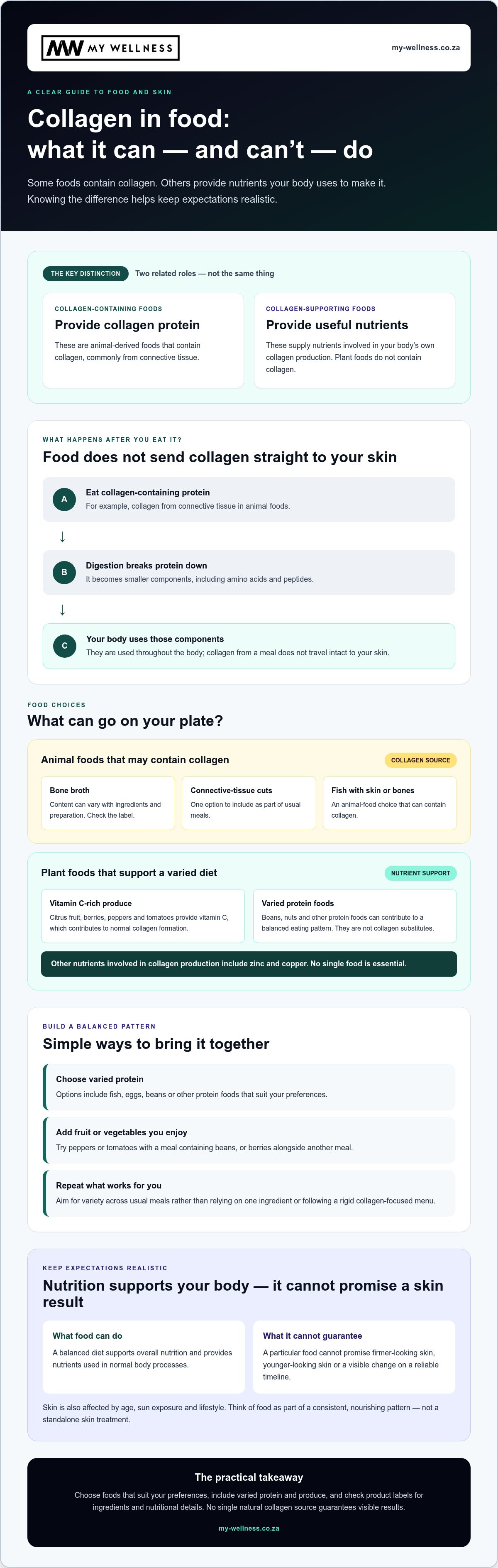
Collagen-containing foods provide collagen protein, whilst collagen-supporting foods provide nutrients the body uses to make collagen. Digestion breaks protein into smaller components, including amino acids and peptides. Your body uses these components throughout its systems; collagen in a meal does not travel intact to your skin. Plant foods do not contain collagen, but they can contribute nutrients that support normal production.
Does eating collagen directly improve skin?
There is a plausible biological link: collagen supplies protein building blocks, and the body uses nutrients from food to maintain its tissues. But that does not prove that eating collagen-rich foods will create a visible change in your skin. A food’s collagen content alone cannot predict what you will notice, and results vary from person to person.
Skin collagen also changes with age, sun exposure and lifestyle. A balanced diet supports overall nutrition, but it cannot guarantee firmer-looking skin or reverse those changes. Think of food as part of a consistent, nourishing pattern, not a standalone skin treatment. Choose collagen-containing foods if they suit your diet, and include a variety of nutrient-rich foods to support your body’s normal processes.
Which natural foods contain collagen or support its production?
For a natural collagen source for skin, look to animal foods that contain connective tissue. Examples include bone broth, connective-tissue cuts of meat, and fish eaten with skin or bones. Their collagen content can vary with the ingredients and preparation, so check product labels rather than assuming every broth provides the same amount.
Animal foods can contain collagen; plant foods do not, but they can supply nutrients that support the body’s collagen production. Citrus fruit, berries, peppers and tomatoes provide vitamin C, which contributes to normal collagen formation. For more on the roles of food and nutrients, see Harvard T.H. Chan School of Public Health’s guide to foods that support collagen production.
Which foods fit different dietary preferences?
If you eat animal foods, you could include fish with skin or connective-tissue cuts as part of your usual meals. Bone broth is another option, but check its label and do not treat it as a guaranteed source of a particular amount of collagen.
Plant-based choices still have a place. Beans, nuts and other varied protein foods contribute to a balanced diet, but they are not collagen substitutes. Pair them with fruit or vegetables such as berries, peppers or tomatoes for a varied mix of nutrients. For example, add peppers or tomatoes to a meal with beans, or have berries alongside another meal. No single food is essential, and none can promise a specific skin result.
Choose foods that suit your preferences and routine. If you’re comparing options, explore Bone Broths and Vegan Protein & Supplements, and check each product’s label for ingredients and nutritional details.
How can you build a balanced, skin-supportive eating pattern?
Keep it flexible. Rather than organising meals around one supposed natural collagen source for skin, build a pattern that supports overall nutrition:
- Include varied protein. Choose options that suit your preferences, such as fish, eggs, beans or other protein foods.
- Add vitamin C-rich produce. Include fruit or vegetables you enjoy alongside meals. Harvard T.H. Chan School of Public Health explains the role of nutrients in foods that support collagen production.
- Repeat what works. Aim for variety across your usual meals rather than relying on one ingredient or following a rigid collagen-focused menu.
Consistency matters more than chasing a single “beauty food”. One meal might pair a protein you enjoy with colourful vegetables or fruit; another could include beans and nuts as part of a varied eating pattern. My Wellness lists Bone Broths as a food-product option. Check the label for ingredients and nutritional details, and treat it as one possible choice, not a skin treatment.
Can food alone guarantee firmer or younger-looking skin?
No. A balanced diet supports general nutrition, but it is not a proven skin treatment and cannot guarantee firmer or younger-looking skin. There is no reliable timeline for visible changes from adding a particular food. Skin is also affected by factors such as age and sun exposure, so consider your overall eating pattern alongside sun-protection habits. Keep the goal realistic: nourish your body consistently without expecting one food to reverse skin changes.
Make your next food choice count
The key is to understand what each food contributes. Animal foods may contain collagen, whilst plant foods can provide nutrients that support your body’s normal collagen production. A varied eating pattern with protein and vitamin C-rich produce is a practical foundation, but no single food can guarantee firmer-looking skin.
Keep your expectations grounded: nourishing meals support overall nutrition, not a promised cosmetic result. Choose foods you enjoy and can include consistently, rather than building your routine around one supposed natural collagen source for skin.
Bone Broths are one of the product categories listed by My Wellness. Explore them as a food option, and check the label for ingredient and nutritional details. My Wellness sells wellness products online to customers nationally in South Africa. Explore My Wellness Bone Broths and keep building a balanced approach that feels achievable for you.
Frequently Asked Questions
Which natural foods contain collagen?
Animal-derived foods can contain collagen, including bone broth, cuts of meat with connective tissue, and fish eaten with its skin or bones. These are examples of a natural collagen source for skin, but the amount can vary by ingredients and preparation. Check product labels where available. Digestion breaks dietary protein into smaller components; it does not send intact collagen directly to your skin.
Can plant-based foods help your body produce collagen?
Yes. Plant foods do not contain collagen, but they can provide nutrients your body uses in normal collagen production. Include vitamin C-rich choices such as citrus fruit, berries, peppers and tomatoes, alongside varied protein foods. Beans and nuts can contribute to a balanced diet, though they are not collagen substitutes. No single plant food is essential or guarantees a visible skin change.
Does bone broth improve skin collagen?
Bone broth may contain collagen, but its content can vary with its ingredients and preparation. Eating it does not guarantee increased collagen in the skin or a visible improvement in firmness. Treat it as one food option within a varied diet, not a skin treatment. If you choose a packaged broth, check the label for ingredients and nutritional details rather than assuming a specific collagen content.
How can I support collagen production naturally?
Build a varied eating pattern with different protein foods and vitamin C-rich fruit and vegetables, and choose options you can enjoy consistently. Sun-protection habits also matter for skin health. Food supports overall nutrition and the body’s normal processes, but it cannot guarantee younger-looking skin or reverse age-related changes. Focus on sustainable habits rather than relying on one ingredient or a rigid menu.