


A high-protein shake isn’t automatically the right choice when your appetite is low and digestion feels slower. Finding the best protein powder for GLP-1 users means looking beyond the number on the label and considering how comfortably you can drink and tolerate it.
If early fullness, nausea or bloating makes solid meals difficult, getting enough protein can feel like another challenge. Supporting lean muscle also matters during weight loss. This guide explains how to compare protein sources, serving sizes and ingredients, and how to fit a shake around your appetite. My Wellness offers the GLP-1 Daily Support Shake as one option to consider when comparing products. Build a manageable routine without forcing down a serving that doesn’t feel right.
Key Takeaways
- Learn why weight loss can affect muscle as well as body fat, and why protein matters in a GLP-1 nutrition strategy.
- Compare the best protein powder for GLP-1 users by checking protein content, digestibility and the full ingredient list.
- Check for ingredients such as sugar alcohols and artificial gums that may not suit a sensitive digestive system.
- Find practical ways to sip a shake gradually and fit it around your appetite.
Why GLP-1 Therapy Demands a Specialised Protein Powder Strategy
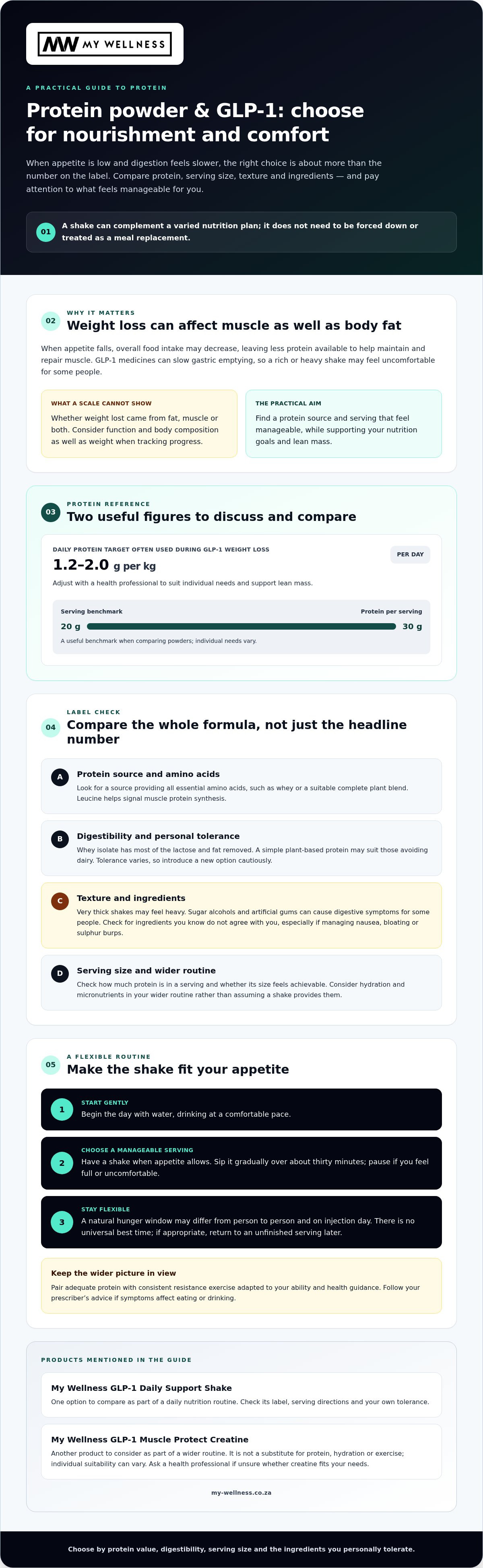
GLP-1 treatment can make weight loss easier to achieve, but a lower number on the scales doesn’t tell the whole story. When appetite falls, overall food intake may also decrease, leaving less protein available to support muscle. Meanwhile, GLP-1 receptor agonists slow gastric emptying, so a rich or heavy shake may sit uncomfortably and worsen nausea for some people. The aim is not simply to drink more. It’s to find a source of nourishment that feels manageable.
Combating Muscle Loss and Sarcopenia During Rapid Weight Loss
Muscle is constantly renewed. When dietary protein is too low, the body has fewer amino acids available to repair and maintain muscle tissue, increasing the risk of losing lean mass alongside body fat. This matters for strength, everyday function and resting energy needs. A bathroom scale cannot show whether weight lost came from fat, muscle or both, so consider function and body composition as well as weight when tracking progress.
A practical protein target often used during GLP-1 weight loss is 1.2–2.0 g per kilogram of body weight daily, adjusted with a health professional to suit individual needs and support lean mass.
Early fullness can make every sip count. A large, dense shake may be difficult to finish, while a smaller protein-rich serving may feel more achievable. When choosing, check the serving size as well as the amount of protein it provides, and consider whether the texture and ingredients seem suitable for you. The My Wellness GLP-1 Daily Support Shake is one product to compare as part of a daily nutrition routine.
Key Criteria to Identify the Best Protein Powder for GLP-1 Users
The best protein powder for GLP-1 users should suit both your nutrition goals and your digestion. Compare the protein source, serving size, texture and full ingredient list rather than choosing by protein content or flavour alone. Whey isolate has most of the lactose and fat removed, whilst a simple plant-based protein may suit those avoiding dairy. Tolerance varies, so introduce a new option cautiously and pay attention to how you feel.
Ingredient Check: Avoiding Gastrointestinal Distress and Heavy Shakes
A very thick shake can add volume and make you feel full before you’ve finished it. With slower gastric emptying, that heaviness may be uncomfortable. Sugar alcohols and artificial gums can also cause digestive symptoms for some people. Check the label, especially if you’re managing nausea, bloating or sulphur burps, and favour a straightforward formula without ingredients you know don’t agree with you.
Protein quality matters, too. Essential amino acids are the building blocks the body needs, and leucine helps signal muscle protein synthesis. Look for a source that provides all essential amino acids, such as whey or a suitable complete plant blend. A serving with 20–30 g of protein is a useful benchmark, though individual needs vary.
Use this quick check before choosing:
- Digestibility: Consider the protein source, texture and ingredients you personally tolerate.
- Protein value: Check the protein per serving and amino acid profile.
- Wider support: Review whether your routine also accounts for hydration and micronutrients, without assuming a shake provides them.
My Wellness’s GLP-1 Daily Support Shake is one option in its GLP-1 support range. Compare its label and serving directions with your needs, and explore the GLP-1 daily nutrition range.
How to Integrate Daily Protein Shakes into Your GLP-1 Routine
A consistent but flexible routine can make protein easier to manage when appetite is low. Instead of forcing down a large shake, prepare a smaller serving and sip it gradually over about thirty minutes. Pause if you feel full or uncomfortable. If appropriate, you can return to it later rather than treating an unfinished serving as a failure.
Optimising Daily Intake with Targeted GLP-1 Nutrition
Use your appetite as a guide. Some people find it easier to drink a shake during a natural hunger window, which may differ on injection day and from one person to the next. There’s no universal best time. Start the day with water, drinking at a comfortable pace, then have nutrient-dense food or a shake when it feels manageable. Follow your prescriber’s advice if symptoms affect eating or drinking.
The My Wellness GLP-1 Daily Support Shake is an option to consider as part of a muscle-supportive routine. Check the serving directions and your own tolerance, and remember that a shake complements rather than replaces a varied nutrition plan.
Pair adequate protein with consistent resistance exercise, adapted to your ability and health guidance. The My Wellness GLP-1 Muscle Protect Creatine is another product to consider as part of that wider routine. It isn’t a substitute for protein, hydration or exercise, and individual suitability can vary. If you’re unsure whether creatine fits your needs, ask a health professional.
- Morning: Sip water at a comfortable pace.
- When appetite allows: Slowly drink a manageable shake serving.
- Across the week: Build a sustainable protein and resistance exercise routine.
Explore the GLP-1 Daily Support Shake as one option while shaping a routine that works for you.
Build a Routine That Supports Your Goals
Choosing the best protein powder for GLP-1 users means balancing protein needs with what feels comfortable to drink. Check the protein source, serving size and ingredients, then choose a texture and portion that suit your appetite. Sipping gradually and finding a natural hunger window can make daily nutrition more manageable. Resistance exercise alongside adequate protein supports a muscle-conscious approach to weight loss.
For a product to compare, consider the GLP-1 Daily Support Shake from My Wellness. Check its product directions and ingredients against your preferences and needs. Individual requirements and tolerances vary, so seek guidance from a health professional if you’re unsure what’s right for you.
Explore the GLP-1 Daily Support Shake and take a practical next step towards a routine that feels sustainable. Progress is built through consistent choices, one manageable serving at a time.
Frequently Asked Questions
Can drinking protein shakes whilst on GLP-1 medications cause nausea?
Yes, protein shakes can contribute to nausea for some people using GLP-1 medications. Slower gastric emptying may make large, thick or high-fat drinks feel heavy, and certain additives can also be uncomfortable. Try a smaller serving, sip it slowly and note how you respond. If nausea is persistent or severe, speak with your healthcare professional.
How much daily protein do GLP-1 users actually need to preserve muscle?
Guidance suggests around 1.2–2.0 g of protein per kilogram of body weight daily, although individual needs vary. Factors such as health, activity and weight-loss goals matter, so ask a healthcare professional for a suitable target. Spreading protein across manageable meals or drinks may help when appetite is reduced. Protein supports muscle, but intake alone cannot guarantee its preservation.
Is plant-based protein or whey isolate better for delayed gastric emptying?
Neither is best for everyone. Whey isolate has most of the lactose and fat removed, so it’s often considered a more digestible choice than whey concentrate. A plant-based option may suit people avoiding dairy, provided it offers a suitable amino acid profile and agrees with them. The best protein powder for GLP-1 users is the one that meets your needs and feels comfortable to tolerate.
What ingredients in standard protein powders should GLP-1 patients avoid?
Consider avoiding or limiting ingredients you know trigger symptoms. Sugar alcohols, artificial gums and some artificial sweeteners may worsen bloating or cramping for sensitive individuals; higher-fat blends or lactose-rich whey concentrate can also feel heavy. Check the ingredient list, choose a simpler formula where possible and assess your own response. Tolerance differs, so one ingredient won’t affect everyone alike.