


A lactose-free label can still mean a product contains milk, so it is not automatically the dairy-free option you need. Finding dairy-free hot chocolate South Africa shoppers can enjoy starts with checking the ingredients and allergen information, not just the wording on the front of the pack.
When comparing products, focus on three practical details: whether the ingredients suit your dietary needs, how sweet and cocoa-forward the mix is, and how it is prepared. A hot chocolate made with water may taste different from one mixed with plant-based milk, and a blend with added sweetener will give you less control over sweetness than plain cocoa. This guide explains what to look for, how to make a shortlist and how to adapt your cup. It also includes hot chocolate from My Wellness as one option to consider, while leaving the product label to guide your decision.
Key Takeaways
- For dairy-free hot chocolate South Africa options, check the full ingredient list and allergen statement rather than relying on the front-of-pack wording alone.
- Compare cocoa or cacao, sweeteners and serving directions to find a flavour and sweetness level that suits you.
- Choose a format that fits your routine, then prepare it with water or plant-based milk for a different texture and flavour.
- Use a simple shortlist: check your dietary needs, scan ingredients, compare sweetness and decide how you’ll make your cup.
Dairy-free hot chocolate in South Africa: what does the label mean?
Dairy-free hot chocolate is a cocoa-based drink made without milk or other dairy ingredients. Labels such as “vegan” and “lactose-free” describe different things, however. For dairy-free hot chocolate South Africa shoppers can choose with care, read the complete ingredient list and allergen statement rather than relying on a claim on the front of the pack.
A mix might contain cocoa, sugar or another sweetener, and flavourings. The ingredient list shows what contributes to the drink’s flavour and sweetness. The linked overview of Sweetness explains why different sweeteners can be perceived differently. Use the product label to see what is actually in the mix: words such as “chocolate” or “plant-based” do not tell you everything about its ingredients.
Dairy-free, vegan and milk-allergy needs are not identical
Dairy-free describes the absence of dairy; vegan describes the absence of animal-derived ingredients. A dairy-free drink could still contain another animal-derived ingredient, such as honey. A vegan drink is dairy-free, but the vegan label alone does not tell you whether the product may have come into contact with milk during production.
Lactose-free means the product is formulated to avoid lactose, the sugar in milk. It does not necessarily mean that the product contains no milk ingredients or proteins, so it is not automatically suitable for someone avoiding dairy or managing a milk allergy. Check the ingredient list for milk ingredients and read precautionary wording such as “may contain milk”. A dairy-free claim alone does not establish allergy safety.
Apply the same careful check to every option, including hot chocolate from My Wellness. Product ingredients can differ, so assess the specific product label each time. This helps you distinguish a dietary preference from an allergy-related need before choosing a drink.
How to compare dairy-free hot chocolate ingredients and sweetness
Once a product fits your dietary needs, compare its ingredients and preparation directions. Cocoa or cacao provides the chocolate profile, while sweeteners and flavourings affect the overall taste. To find dairy-free hot chocolate South Africa shoppers can tailor to their preferences, consider the ingredients and serving instructions together. The amount and type of liquid can change the finished cup.
Choose a cocoa profile and sweetness level that suits you
A cocoa-forward blend may taste more intense and less sweet. A prepared drink mix may include sweeteners and flavourings for a rounder, sweeter cup. Look for cocoa or cacao content where it is stated, then check whether the ingredients include sugar, glucose syrup, stevia or another sweetener. These are examples of label terms, not health recommendations. Compare the serving directions too: the amount of powder used affects the flavour and sweetness in your cup.
“Unsweetened” generally signals that no sweetener has been added, but it does not mean the product is dairy-free, ready to drink or guaranteed to taste sweet when prepared. Plain cocoa may need you to add your own sweetener, while a drink mix may be designed for a particular amount of water or milk alternative. Follow the directions first, then adjust the sweetness to taste.
- Cocoa profile: Note the cocoa or cacao content if stated, along with any added flavourings.
- Sweetness: Identify the sweeteners and decide whether you want control over sweetness or prefer a mix that is already sweetened.
- Preparation: Check the serving amount and recommended liquid before comparing products.
Use this checklist to compare options, including My Wellness hot chocolate options. Check each product’s ingredient list and allergen information against your own dietary needs.
Make your South African dairy-free hot chocolate shortlist
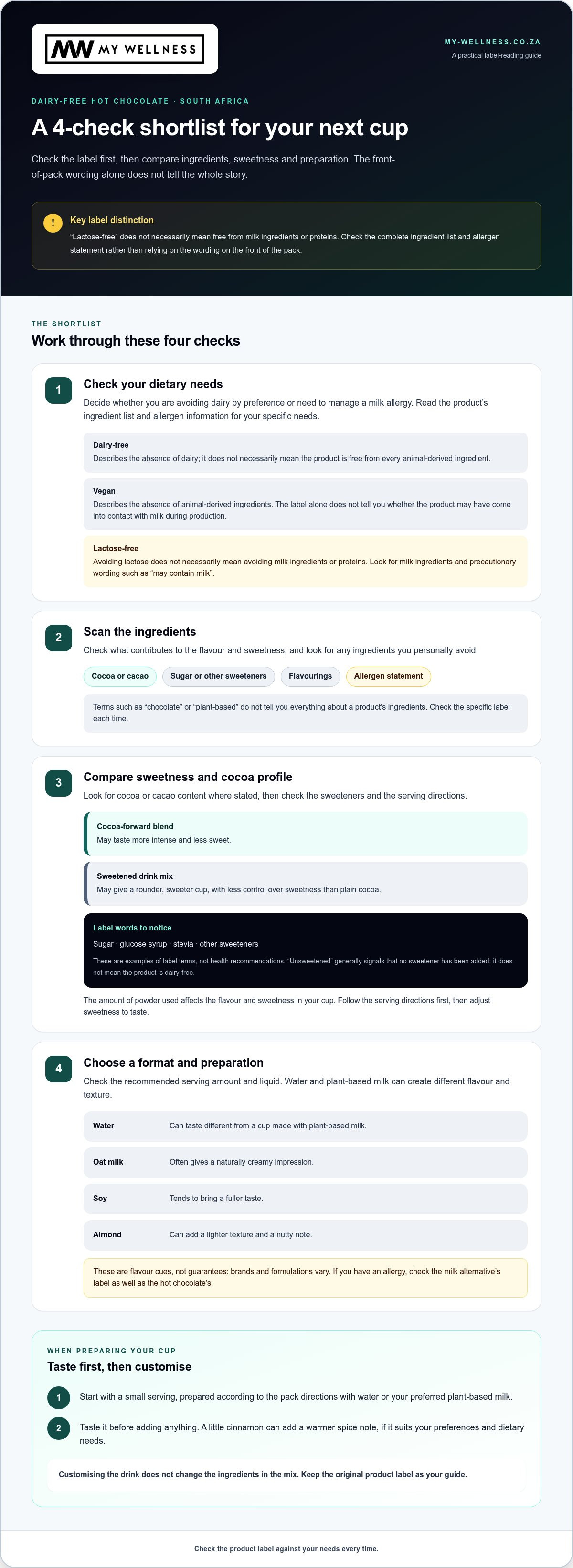
A repeatable shortlist makes label reading quicker. Compare each option against your dietary needs and the kind of cup you enjoy, rather than choosing on packaging alone. You can note the ingredients, sweetness and preparation method for each product, then rule out any that do not fit your requirements.
- Check your dietary needs. Decide whether you’re avoiding dairy by preference or need to manage a milk allergy, then read the relevant label details carefully.
- Scan the ingredients. Look for cocoa, sweeteners and flavourings, as well as any ingredients you personally avoid.
- Compare sweetness. Choose between a less-sweet cocoa base you can customise and a mix already formulated to taste sweeter.
- Choose a format. Read the preparation directions and decide whether you’d rather use water or plant-based milk.
Your choice of liquid can change the finished cup. Oat milk often gives a naturally creamy impression; soy tends to bring a fuller taste, while almond can add a lighter texture and a nutty note. Brands and formulations vary, so treat these as flavour cues rather than guarantees. If you have an allergy, check the milk alternative’s label as well as the hot chocolate’s.
Adjust the cup without losing sight of the label
Start with a small serving, prepared according to the pack directions with water or your preferred plant-based milk. Taste it before adding anything. For a warmer spice note, you could stir in a little cinnamon, provided it suits your preferences and dietary needs. Keep the original product label as your guide: customising the drink does not change the ingredients in the mix.
Use this process to compare dairy-free hot chocolate South Africa options, including hot chocolate from My Wellness. Add the My Wellness hot chocolate range to your shortlist, then assess the product’s ingredient and allergen information against your needs.
Choose your next cup with confidence
Choose a hot chocolate that fits your dietary needs, taste preferences and routine. A shortlist makes it easier to compare ingredients and preparation directions without being swayed by packaging alone. Once you have chosen a suitable product, you can adjust the cup at home to suit your preferred texture and flavour.
My Wellness offers hot chocolate alongside wellness and nutrition products, including vegan protein, keto supplements, muscle meals and bone broths. Its products are available to customers online across South Africa. Check the product information to see whether a particular hot chocolate fits your needs.
Explore the My Wellness range and compare its hot chocolate with your shortlist to find an option that fits your preferences.
Frequently Asked Questions
Is dairy-free hot chocolate suitable for someone with a milk allergy?
Not necessarily. A dairy-free claim does not by itself establish that a product is suitable for a milk allergy. Read the full ingredient list and any precautionary wording, such as “may contain milk”, which can signal possible cross-contact during production. If the label leaves you uncertain, choose an option with clear allergen information and follow the advice you’ve received for managing your allergy when selecting dairy-free hot chocolate in South Africa.
Can dairy-free hot chocolate still contain animal-derived ingredients?
Yes. Dairy-free only addresses milk and milk-derived ingredients; it does not rule out other animal-derived ingredients. For example, a product could contain honey and still be dairy-free. If you follow a vegan diet, review every ingredient rather than relying on a dairy-free claim alone. Check toppings and additions separately too, as they can change whether the finished drink meets your preferences.
Can I make dairy-free hot chocolate with water instead of plant milk?
Yes, if the product’s serving instructions allow it. Water makes a straightforward cup, though it may taste less creamy than one made with a plant-based drink. For a smoother result, mix the powder with a small splash of hot water first to form a paste, then gradually stir in the remaining water. Follow the pack directions if they recommend a different method.
How should I store dairy-free hot chocolate powder after opening?
Follow the storage instructions on the pack, as they’re specific to that product. In general, reseal the container securely after each use and keep the powder in a cool, dry place, away from steam and moisture. Use a clean, dry spoon rather than one that’s damp. Check the best-before date and discard the powder if its packaging is damaged or its appearance has changed.