


Losing weight is simple; keeping your hard-earned muscle whilst doing it is the real challenge. You've likely felt that frustrating drop in strength during a heavy set or worried about a slowing metabolism as the numbers on the scale drop. It's a common fear that shedding fat means sacrificing the tone and power you've worked so hard to build. This guide reveals exactly how to avoid muscle loss during weight loss to ensure you achieve a sculpted, high-performance physique rather than just a smaller version of your current self.
We will break down the essential three-pillar system of muscle preservation: mechanical stimulus, amino acid availability, and metabolic protection. From the benefits of targeted support like GLP-1 Muscle Protect Creatine to the vital role of high-quality nutrient intake, discover the strategies you need to stay strong, vibrant, and metabolically active throughout your transformation.
Key Takeaways
- Master Muscle Protein Synthesis by hitting protein targets and maintaining resistance training to signal your body to keep its lean tissue.
- Discover how to avoid muscle loss during weight loss by using targeted support like GLP-1 Muscle Protect Creatine to sustain cellular energy.
- Optimise your hormonal health through quality sleep and stress management to prevent cortisol from breaking down your hard-earned muscle.
- Use high-quality nutrient support like the GLP-1 Daily Support Shake to meet your daily requirements without compromising your calorie goals.
Prioritising Protein and Resistance Training for Muscle Maintenance
Muscle is metabolically expensive. If you don't give your body a reason to keep it, it won't. Understanding Muscle Protein Synthesis (MPS) is the first step in learning how to avoid muscle loss during weight loss. MPS is the biological mechanism that repairs and builds tissue. In a calorie deficit, your body naturally looks for energy sources. Without sufficient stimulus and fuel, it may break down your lean mass to meet its metabolic demands.
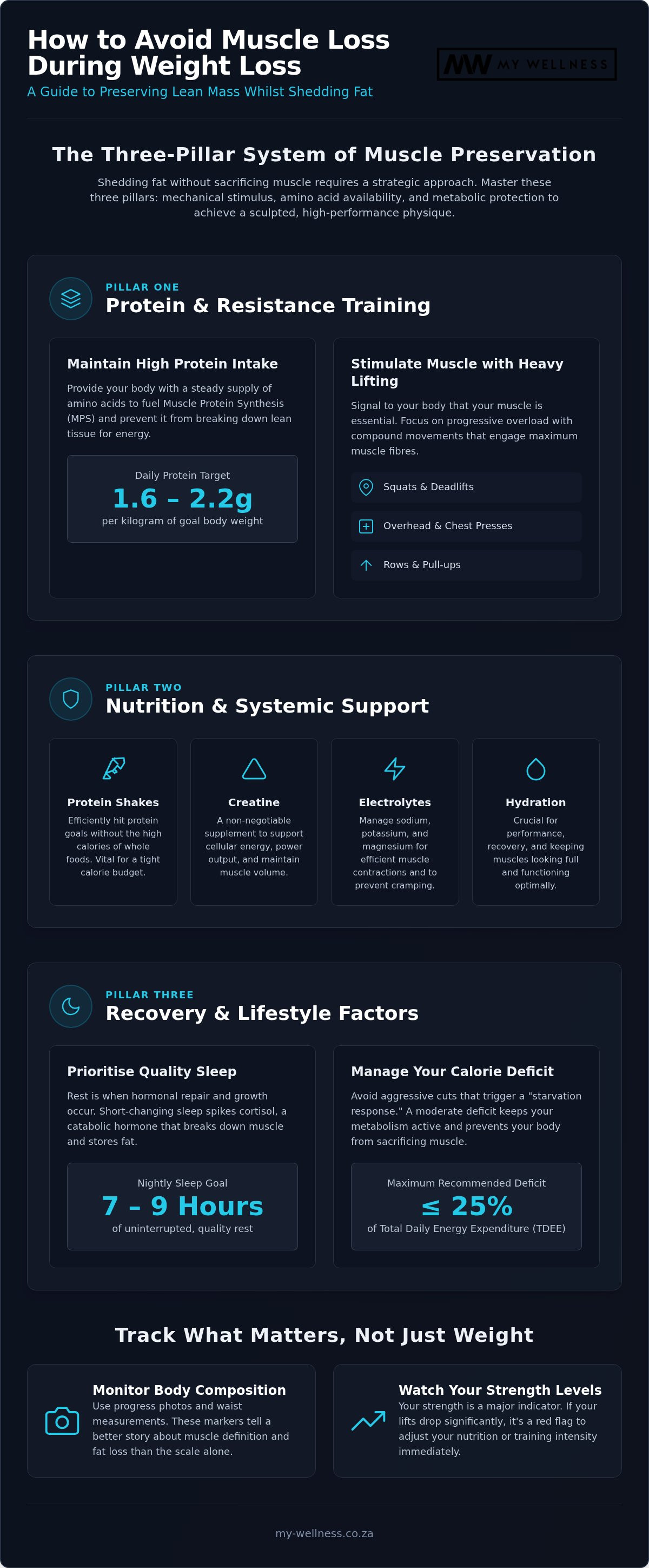
Aim for a high protein target of 1.6g to 2.2g per kilogram of your goal body weight. This range ensures a steady supply of amino acids to support MPS throughout the day. For those with lower appetites, utilising the GLP-1 Daily Support Shake or Keto Muscle Meals makes hitting these numbers achievable without feeling overfull. These options provide high-quality protein specifically designed for those in a deficit.
Combine this nutrition with heavy resistance training. Implement progressive overload by gradually increasing weight, reps, or improving form. Focus on compound movements:
- Squats and deadlifts
- Overhead and chest presses
- Rows and pull-ups
These exercises engage maximum muscle fibres and signal to your nervous system that your strength is essential. This proactive approach prevents the body from downsizing your muscle tissue while you shed body fat.
The Golden Rules of Training Whilst Dieting
Keep your training intensity high. You might need to reduce your total sets as energy levels dip, but keep the weight on the bar heavy to maintain strength signals. Avoid excessive steady-state cardio. Too much can contribute to a catabolic state where your body sacrifices muscle for energy. Ensure at least 48 hours of recovery between working the same muscle groups to allow for proper tissue repair and hormonal balance.
Optimising Nutrition and Supplementation for Systemic Support
While protein is the foundation, systemic support is the secret to how to avoid muscle loss during weight loss. High-quality shakes allow you to hit your protein targets without the heavy calorie load of whole food meals. This efficiency is vital when you're working with a tight calorie budget. It ensures you remain in a deficit while keeping your muscles fed.
Don't overlook creatine monohydrate. It's one of the most researched supplements for supporting cellular energy and maintaining muscle volume. It draws water into the muscle cells. This creates a fuller look and provides the phosphate groups needed for explosive power during your workouts. It's a non-negotiable for anyone serious about keeping their strength.
Combine this with rigorous electrolyte management. Proper sodium, potassium, and magnesium levels ensure efficient muscle contractions and prevent the cramping often associated with fat-loss phases. Protecting your metabolism also requires nutrient-dense superfoods. These prevent micro-deficiencies that can stall progress. A body that lacks essential vitamins will prioritise survival over muscle maintenance every time.
Targeted Support for Modern Weight Loss
For those navigating significant calorie deficits, specialised tools are essential. Use GLP-1 Muscle Protect Creatine to safeguard lean mass during periods of rapid weight loss. If your appetite is suppressed, the GLP-1 Daily Support Shake fills critical nutritional gaps effectively without adding unnecessary bulk. Finally, prioritising hydration with GLP-1 Hydration Support Strawberry Lemonade keeps your performance high and your muscles hydrated. These South African-made solutions provide the precise support needed to stay toned, energetic, and strong throughout your journey.
Managing Recovery and Lifestyle Factors to Protect Lean Mass
Weight loss isn't just about the gym or kitchen. It's about what happens while you rest. Prioritise 7-9 hours of quality sleep every night. This is when hormonal repair and growth occur. Short-changing your rest spikes cortisol; this stress hormone is notoriously catabolic. High cortisol levels signal your body to store fat and break down muscle tissue for energy. Managing stress is a critical component of how to avoid muscle loss during weight loss.
Be strategic with your calorie deficit. Avoid aggressive cuts that exceed 25% of your Total Daily Energy Expenditure (TDEE). Dropping your intake too low triggers a starvation response. Your body will sacrifice muscle to lower its metabolic rate and survive the perceived famine. Stick to a moderate, sustainable approach to keep your metabolic fire burning.
Monitoring Your Progress Effectively
Track your body composition, not just the number on the scale. Use progress photos and waist measurements to see changes in muscle definition. These markers often tell a better story than weight alone.
Keep a close eye on your strength levels. If your lifts drop significantly, it's a major red flag. Adjusting your strategy is the best way how to avoid muscle loss during weight loss when the scale moves too fast. Aim for a loss of no more than 1% of your total body weight per week. Anything faster usually comes at the expense of your lean mass. Stay patient. Focus on the long-term aesthetic and functional outcome.
Master Your Transformation
Sculpting a leaner physique requires more than just a calorie deficit; it demands a strategic commitment to your muscle tissue. By prioritising high-quality protein, maintaining heavy training intensity, and managing your recovery, you've mastered how to avoid muscle loss during weight loss. These habits protect your metabolism and ensure your results are both visible and sustainable. Don't let your hard work in the gym fade away during your cutting phase.
As South Africa’s leading natural wellness brand, My Wellness provides the specialised GLP-1 muscle protection and vegan-friendly protein options you need to thrive. Protect your lean mass with the My Wellness GLP-1 Support Range and ensure your body has the systemic support it deserves. You've got the knowledge and the tools to succeed. Stay empowered, stay consistent, and enjoy the confidence that comes with a strong, toned body.
Frequently Asked Questions
Can I lose fat and gain muscle at the same time?
Yes, body recomposition is entirely possible, especially for beginners or those returning to consistent training. It requires a high-protein diet and disciplined resistance training to signal growth while the body uses stored fat for energy. Maintaining a slight calorie deficit ensures you have enough fuel for intense workouts while effectively learning how to avoid muscle loss during weight loss.
How much protein do I really need to avoid muscle loss?
Aim for 1.6g to 2.2g of protein per kilogram of your goal body weight daily. This range is essential for sustaining Muscle Protein Synthesis and preventing tissue breakdown during a deficit. This is a primary strategy for how to avoid muscle loss during weight loss. High-quality shakes help you hit these targets efficiently without consuming excess calories.
Is it possible to maintain muscle without lifting heavy weights?
It is very difficult to maintain muscle without some form of resistance training to provide a mechanical stimulus. While you don't always need to lift maximum loads, you must train with enough intensity to reach near-failure. Compound movements like squats and presses are the most effective ways to signal to your nervous system that your lean mass is vital.
Will taking creatine make me look bloated during weight loss?
Creatine does not cause traditional bloating; it increases intracellular water retention. This process draws water directly into the muscle cells rather than under the skin, which actually makes your muscles look firmer and more defined. Using GLP-1 Muscle Protect Creatine supports this muscle fullness and provides the energy needed for high-performance workouts during your fat-loss phase.