


What if the best protein choice for women isn’t tied to gender at all? If you’ve wondered “is vegan protein good for women?”, it can be a good fit when it suits your needs and forms part of your overall diet. It’s understandable to ask whether plant-based options provide essential amino acids or can fit into a routine focused on strength and recovery. The protein sources you eat and the rest of your diet matter more than the label alone.
This guide explains when vegan protein powder may be useful and how to assess a product without relying on marketing claims. Learn what to check on the label, how different protein sources may fit your preferences, and how to include plant protein alongside varied whole foods. Use these steps to find an option that suits your routine, not as a reason to replace balanced meals.
Key Takeaways
- Wondering “is vegan protein good for women”? It can form part of a balanced diet, with protein supporting normal body functions, tissue maintenance and muscle repair.
- Compare pea, soy and other plant protein sources against your preferences and needs. No single source is automatically best for everyone.
- Check the full ingredient list, allergen information and serving details so you know what you’re choosing.
- Review your usual meals first. Protein powder may offer convenience alongside food-based options, but it isn’t essential for everyone.
Is vegan protein good for women? Start with what protein does
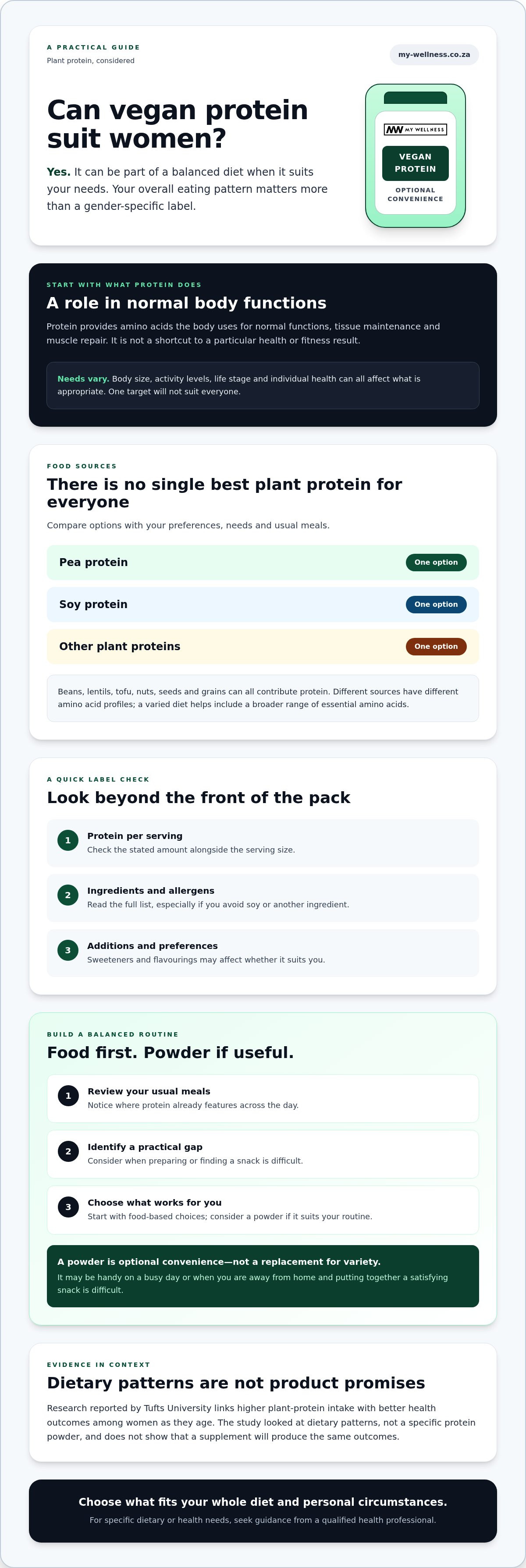
Yes. Vegan protein can suit women as part of a balanced diet. Protein provides amino acids the body uses for normal functions, tissue maintenance and muscle repair. It isn’t a women-specific requirement or a shortcut to a particular health or fitness result. Its usefulness depends on how it fits your overall eating pattern and needs.
Protein needs vary. Body size, activity levels, life stage and individual health can all affect what is appropriate, so one target won’t suit everyone. Consider your usual meals and circumstances rather than relying on a single number or assuming that you need a powder.
Does women’s protein need to come from animal foods?
No. Protein can come from animal foods or a range of plant foods, including beans, lentils, tofu, nuts, seeds and grains. Essential amino acids are those the body can’t make in sufficient amounts, so they need to come from food. Different sources have different amino acid profiles, and eating a varied diet helps you include a broader range. Learn more about protein quality, which considers amino acid composition and digestibility.
Vegan protein can suit women, but its suitability comes from the overall diet, not a gender-specific supplement claim. You don’t need to rely on one plant ingredient as the answer. Look at what you eat across the day and whether your choices include a useful mix of protein sources. If you have specific dietary or health needs, seek individual guidance from a qualified health professional.
How to choose vegan protein for your goals and diet
Start with your routine, not the marketing. If you’re asking “is vegan protein good for women?”, a suitable choice is one that fits your dietary needs, tastes good to you and works with the way you eat. Pea, soy and other plant proteins can all be options; none is automatically right for everyone. Consider allergies, food preferences, flavour and convenience, as well as the protein you already get from meals.
Research reported by Tufts University links higher plant-protein intake with better health outcomes among women as they age. This is useful context, not proof that a particular powder will deliver a specific result. Apply it to your wider food choices, and still check the product label before deciding.
What should women check on a vegan protein label?
Read the full label before choosing. Check the protein amount per serving and the stated serving size. Review the ingredients and allergen information, especially if you avoid soy or another ingredient. Sweeteners, flavourings and other additions may affect whether a product suits your preferences. Compare products by what they contain and how you plan to use them, rather than relying on front-of-pack claims.
A useful label check starts with protein per serving, then considers the full ingredient list, allergens and serving size. If you need a practical option between meals or around your routine, a powder may be convenient, but it doesn’t replace a varied diet. You can explore vegan protein and supplements from My Wellness, then check the current product label for its ingredients and serving information.
How to use vegan protein as part of a balanced routine
Build your routine around food first. Review what you typically eat across the day and identify whether there’s a practical gap, rather than assuming you need a supplement. Beans, lentils, tofu, nuts, seeds and other protein-containing foods can feature in meals and snacks. A powder is optional convenience, not a substitute for variety or a promise of weight, hormone or disease outcomes.
- Assess your usual meals. Note where protein already features.
- Identify a practical gap. Consider when preparing or finding a snack is difficult.
- Choose an option that works. Start with food-based choices, then consider a powder if it suits your routine.
The Tufts University study on plant protein looked at dietary patterns, not a specific protein powder. Evidence about plant foods doesn’t establish that a supplement will produce the same outcomes. If you’re wondering “is vegan protein good for women?”, consider how it fits your whole diet and personal circumstances.
When might a vegan protein powder be useful?
A powder may be handy on a busy day or when you’re away from home and find it difficult to put together a satisfying snack. It’s one option, not a daily requirement. Check the current label for ingredients, allergens and serving information. If you have health concerns, specific dietary needs or questions about your protein intake, speak with a registered dietitian or healthcare professional.
If convenience matters to your routine, you can explore vegan protein options from My Wellness and review the product details before choosing.
Make a choice that fits your routine
So, is vegan protein good for women? It can be a suitable option, but the right choice depends on your overall diet, preferences and individual needs. Focus on variety first, then compare the protein per serving, ingredients and allergen information. A powder is optional convenience, not a replacement for balanced meals or a guarantee of specific results.
My Wellness offers vegan protein and supplements online to customers across South Africa. If you’re considering a convenient option, review the product details and current label to see whether it suits your routine.
Explore vegan protein options from My Wellness and check the label to choose what fits your needs.
Frequently Asked Questions
Is vegan protein as effective as whey protein for women?
Vegan protein can contribute to protein intake, but it isn’t automatically identical to whey in composition or digestibility. The source, amino acid profile and amount per serving all matter. Some powders use a blend of plant proteins, while others use a single source. Compare the label and consider how the product fits your overall diet rather than judging by the category alone.
Can women build muscle with vegan protein?
Yes, women can build muscle while meeting their protein needs through vegan foods and, if useful, plant-based protein powder. Muscle growth also depends on regular resistance exercise, enough overall food and recovery, so a supplement alone won’t do the job. Include varied protein sources in meals and snacks, and seek personalised advice if you’re unsure whether your diet supports your training.
What should women look for in a vegan protein powder?
Check the protein amount per serving, serving size, protein source, full ingredient list and allergen information. Consider whether sweeteners or flavourings suit your preferences and dietary needs. If you’re asking “is vegan protein good for women?”, the label can help you decide whether a particular product works for you. Review the current packaging, as ingredients and serving details can differ between products.
Do women need vegan protein powder if they eat a plant-based diet?
No. A powder isn’t essential if your varied plant-based diet provides the protein you need. Lentils, beans, tofu, nuts, seeds and grains can all contribute. Powder may offer convenience on a busy day or when a snack is difficult to arrange, but it shouldn’t replace a varied diet. If you have individual nutrition concerns, consult a registered dietitian or healthcare professional.