


Smaller meals make every bite count. GLP-1 medicines can reduce appetite and food intake, making it harder to get essential nutrients. For people losing weight, a protein intake of 1.0–1.6 grams per kilo is recommended; protein can help reduce muscle loss associated with GLP-1 medication. Thoughtfully chosen supplements to support your GLP-1 journey can complement a balanced eating pattern, but they should fit your needs.
If you’re eating less, it’s natural to wonder which nutrients to prioritise and whether protein can help support lean body mass. Make smaller meals nutrient-dense, and discuss targeted supplementation with your healthcare provider.
This guide covers nutrients to focus on, practical ways to include protein and how supplements may fit into your routine. Use this South Africa-focused information to make informed choices, without treating supplements as substitutes for food or prescribed care.
Key Takeaways
- Use the recommended protein range of 1.0–1.6 grams per kilo as a guide when planning meals to support lean body mass.
- Make smaller meals count by considering key vitamins and minerals, including vitamin D needs that vary with age.
- Build a practical approach to bone and muscle support around nutrient-dense food and targeted supplementation where appropriate.
- Learn how a GLP-1 support shake may fit into your routine when reduced appetite makes balanced nutrition harder.
1. How can supplements support my GLP-1 journey?
GLP-1 medications can reduce appetite, so smaller meals may make adequate protein intake harder. For people losing weight, a protein intake of 1.0–1.6 grams per kilogram is recommended; protein can help reduce medication-associated muscle loss and support function.
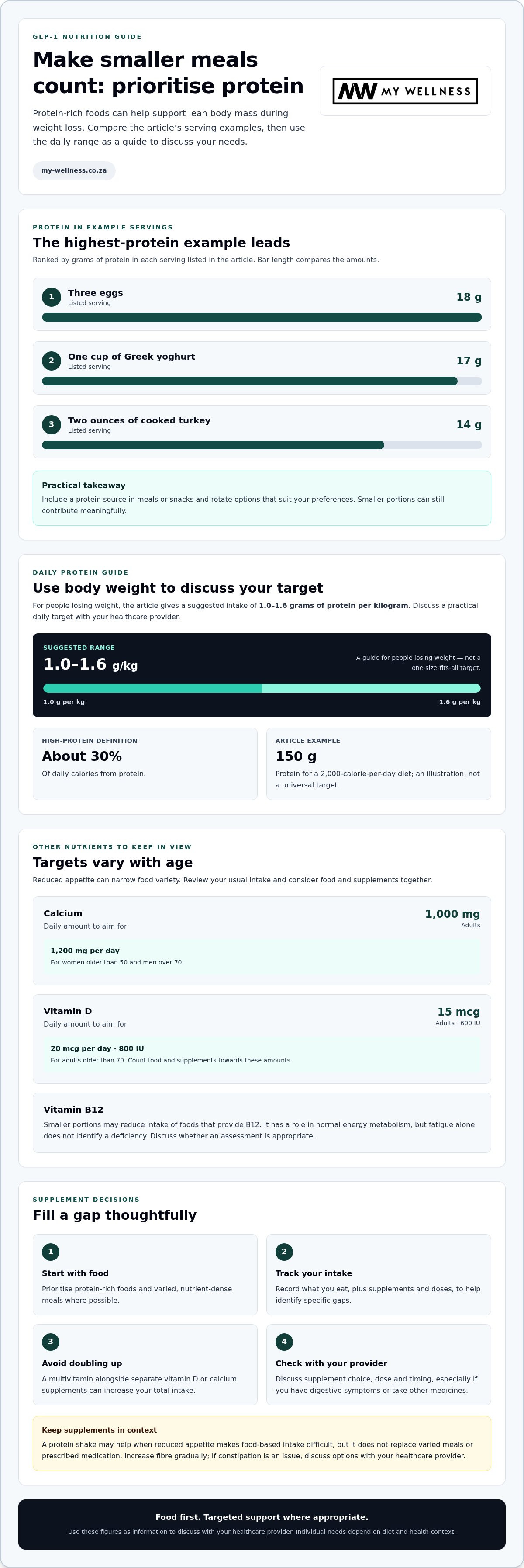
Muscle matters for movement and everyday strength. Bone health matters too: adults should aim for 1,000 mg of calcium per day. Women older than 50 and men over 70 should aim for 1,200 mg per day. Prioritise protein-rich foods first; a protein supplement can help fill a gap when appetite limits meal size.
GLP-1 medicines mimic the body’s hormone, stimulate insulin production, suppress glucagon and slow gastric emptying. If you’re taking GLP-1 medication, ask your healthcare provider about targeted supplements, particularly if you have digestive symptoms or take other medicines.
Increase fibre gradually. If constipation is an issue, discuss a supplement with your healthcare provider. No single type suits everyone: symptoms, fluid intake and medication use all matter.
In South Africa, use clear product labels to review ingredients and doses, and treat supplement claims carefully. For semaglutide or tirzepatide, gastrointestinal effects can include nausea, vomiting, diarrhoea, constipation, abdominal discomfort and bloating. Nature Made lists these effects among common reactions to GLP-1 medicines.
There’s no single supplement dose or timing that suits every GLP-1 user. Follow your medication schedule and discuss supplement dose and timing with your healthcare provider. Costs depend on the chosen product; options include My Wellness GLP-1 Daily Support Shake and GLP-1 Muscle Protect Creatine.
To support muscle retention and nutrient intake, pair protein-rich meals with suitable supplements where appropriate. A shake may help when smaller portions make it harder to get protein from food.
2. Vitamins and minerals for smaller meals
Reduced appetite can narrow food variety, so review the nutrients you actually eat. Vitamin D supports bone health, and the daily target depends on age: adults should aim for 15 mcg (600 IU) daily, while adults older than 70 should aim for 20 mcg (800 IU). Count food and supplements towards these amounts.
Vitamin B12 deserves attention if smaller portions reduce your intake of foods that provide it. B12 has a role in normal energy metabolism, but fatigue alone doesn’t identify a deficiency. Note changes in eating and energy, then discuss whether B12 assessment is appropriate with your healthcare provider.
Which vitamins and minerals may need monitoring during GLP-1 treatment? Review vitamin D, vitamin B12 and calcium intake, alongside your overall diet. Your age, food choices and health history help determine which levels or nutrients warrant assessment.
A multivitamin won’t automatically address every potential nutrient gap. Track your meals and supplements, then compare your usual intake with your needs. Avoid doubling up: taking a multivitamin alongside separate vitamin D or calcium supplements can increase your total intake.
Keep the steps simple. Record what you eat, note supplements and doses, and bring that list to your healthcare provider. If reduced eating makes varied meals difficult, ask which specific nutrient needs attention rather than adding several products at once. A probiotic is a separate consideration: it may support digestion and gut health for some people, but it hasn’t been well studied specifically in GLP-1 users. Choose based on the concern you’re addressing, not a promise of weight loss or an effect on the GLP-1 receptor.
3. Protein and lean-body-mass support
GLP-1 receptor agonist medicines can reduce appetite, making protein harder to manage during weight loss. A suggested intake for people losing weight is 1.0–1.6 grams per kilogram. Use your body weight to discuss a practical daily target with your healthcare provider. Protein supplies nutrients that help limit muscle loss, supporting strength and everyday function during weight management.
Build meals around a clear protein source. Three eggs provide 18 g of protein; two ounces of cooked turkey provide 14 g; one cup of Greek yoghurt provides 17 g. These examples show how smaller portions can still contribute meaningfully. Rotate options that suit your preferences, and include protein in meals or snacks rather than relying on one large serving.
A high-protein diet is generally defined as about 30% of daily calories from protein. For a 2,000-calorie-per-day diet, 150 g of protein is an example. That figure illustrates the definition, not a universal target: needs depend on the person’s diet and health context. GLP-1 medicines also affect digestion by slowing gastric emptying, so choose foods that feel manageable.
A protein supplement can offer a convenient source when reduced appetite makes food-based intake difficult. It supports your nutrition plan, but doesn’t replace varied meals or prescribed medication. GLP-1 medicines stimulate insulin production and suppress glucagon, hormones involved in blood sugar regulation; supplements aren’t substitutes for managing treatment. For an option designed around protein support, explore protein support options and discuss your intake with your healthcare provider.
My Wellness: GLP-1 Daily Support Shake
My Wellness GLP-1 Daily Support Shake is an option to consider when smaller meals make your nutrition routine harder to manage. Use it as a supplement to your eating plan, not as a replacement for prescribed GLP-1 medication or a varied diet. If you’re unsure whether a shake suits your needs, discuss its place in your routine with your healthcare provider, especially if you take other medicines or experience digestive effects.
Choose support that aligns with your current priorities. My Wellness also offers GLP-1 Hydration Support Strawberry Lemonade and GLP-1 Muscle Protect Creatine. Review product details and consider your nutrition goals before deciding what fits. For tailored supplement guidance, speak with your healthcare provider. Visit My Wellness to explore the GLP-1 Daily Support Shake.
Make your next step a considered one
Build a routine around choices that feel practical and sustainable. A thoughtful selection of supplements to support your GLP-1 journey starts with your personal nutrition priorities, not a crowded cupboard. Keep your prescribed treatment plan central, and use supplement choices to complement the way you eat and live.
My Wellness offers the GLP-1 Daily Support Shake, GLP-1 Hydration Support Strawberry Lemonade and GLP-1 Muscle Protect Creatine. Explore these options as you consider what could fit your routine, and discuss supplement choices with your healthcare provider when needed.
Contact My Wellness for support and take your next step with confidence.
Frequently Asked Questions
How does GLP-1 help with weight loss?
GLP-1 medicines mimic a hormone involved in blood glucose regulation. They stimulate insulin production, suppress glucagon and slow gastric emptying. These effects can reduce appetite and help people feel full sooner, which may lead to eating less. Weight management still involves everyday food choices and prescribed treatment; supplements don’t replace GLP-1 medication.
Does cinnamon increase GLP-1?
Available evidence on supplements that may raise GLP-1 comes largely from animal and laboratory research, with limited evidence about their effects in humans. Cinnamon can add flavour to meals, but don’t treat it as a proven way to raise GLP-1 or as a substitute for prescribed medication. Keep your treatment plan unchanged unless your prescriber advises otherwise.
How can supplements support my GLP-1 journey?
Supplements to support your GLP-1 journey can help address a specific nutrition priority when appetite changes make your usual eating routine harder. Start by identifying the gap, such as difficulty meeting protein needs, then review ingredients and serving directions. Choose a product for a clear purpose rather than combining several supplements without a plan.
How can you determine the right supplements for you?
Choose supplements with your diet, symptoms, health history and medicines in mind. List everything you take, including vitamins and herbal products, and share it with your healthcare provider. They can consider potential interactions and whether targeted supplementation is appropriate. This is especially useful when changing your diet or experiencing persistent digestive effects.
Want more GLP-1 wellness tips?
Keep a simple record of meals, fluids, supplements and symptoms. Note when appetite changes or digestive discomfort affect what you can eat, and share these observations with your healthcare provider to guide practical adjustments. Focus on steady habits that fit your prescribed treatment, rather than adding a supplement for every change.