


The gentlest answer may be a smaller meal, not a special food. If tirzepatide has left you queasy, working out what to eat on tirzepatide to avoid nausea can feel like guesswork. Reduced appetite can also make it harder to eat and drink enough, while persistent or severe symptoms may need medical attention.
You don’t need a rigid food list. Start with simple, lower-fat options, adjust portions and sip fluids at a pace that feels manageable. Tolerance varies, so treat these ideas as starting points, not rules. You’ll also learn what to track and when to contact a healthcare professional, especially if nausea continues, worsens or comes with concerning symptoms. Food choices may support comfort, but they can’t replace personalised advice from the clinician managing your treatment. Make one manageable change at a time and adapt it to what your body tolerates.
Key Takeaways
- Find out how tirzepatide can affect appetite and digestion, and why food may not feel the same as before.
- Explore what to eat on tirzepatide to avoid nausea, with flexible choices rather than a rigid food list.
- Learn how smaller portions, a slower pace and thoughtful fluid intake may support comfort and hydration.
- Recognise when nausea or difficulty keeping fluids down calls for prompt medical advice.
Why tirzepatide can make eating feel different, and what food can realistically do
Nausea can make even a familiar meal feel daunting, but not everyone taking tirzepatide experiences it. The medicine affects appetite and digestion: it activates GIP and GLP-1 receptors and can slow stomach emptying. Food may stay in your stomach longer, so you might feel full sooner or notice discomfort after eating. Nausea is a recognised side effect, particularly during dose increases.
That shift can make usual portions or rich meals feel less comfortable. For background on how the medicine works and its reported side effects, see Tirzepatide on Wikipedia. If you’re wondering what to eat on tirzepatide to avoid nausea, think of food as one way to support comfort, not a guaranteed fix. Your response can vary from day to day, and dietary changes won’t alter how the medicine works.
Is nausea a reason to change your whole diet?
Usually, a blanket list of forbidden foods isn’t the most useful starting point. People tolerate different foods, and a meal that feels fine one day may not suit you another. Notice whether particular portions, textures or richer foods seem to coincide with symptoms. Focus on options you can manage rather than cutting out whole food groups without clinical advice.
Supportive eating strategies may help you cope with nausea, but they don’t treat its cause or guarantee prevention. Prioritise fluids and adequate nourishment as tolerated. If nausea makes it difficult to eat or drink enough, or symptoms persist or worsen, speak with the clinician managing your treatment. They can assess your symptoms and advise whether your care needs to change.
What to eat on tirzepatide: gentle meals, smaller portions and steady fluids
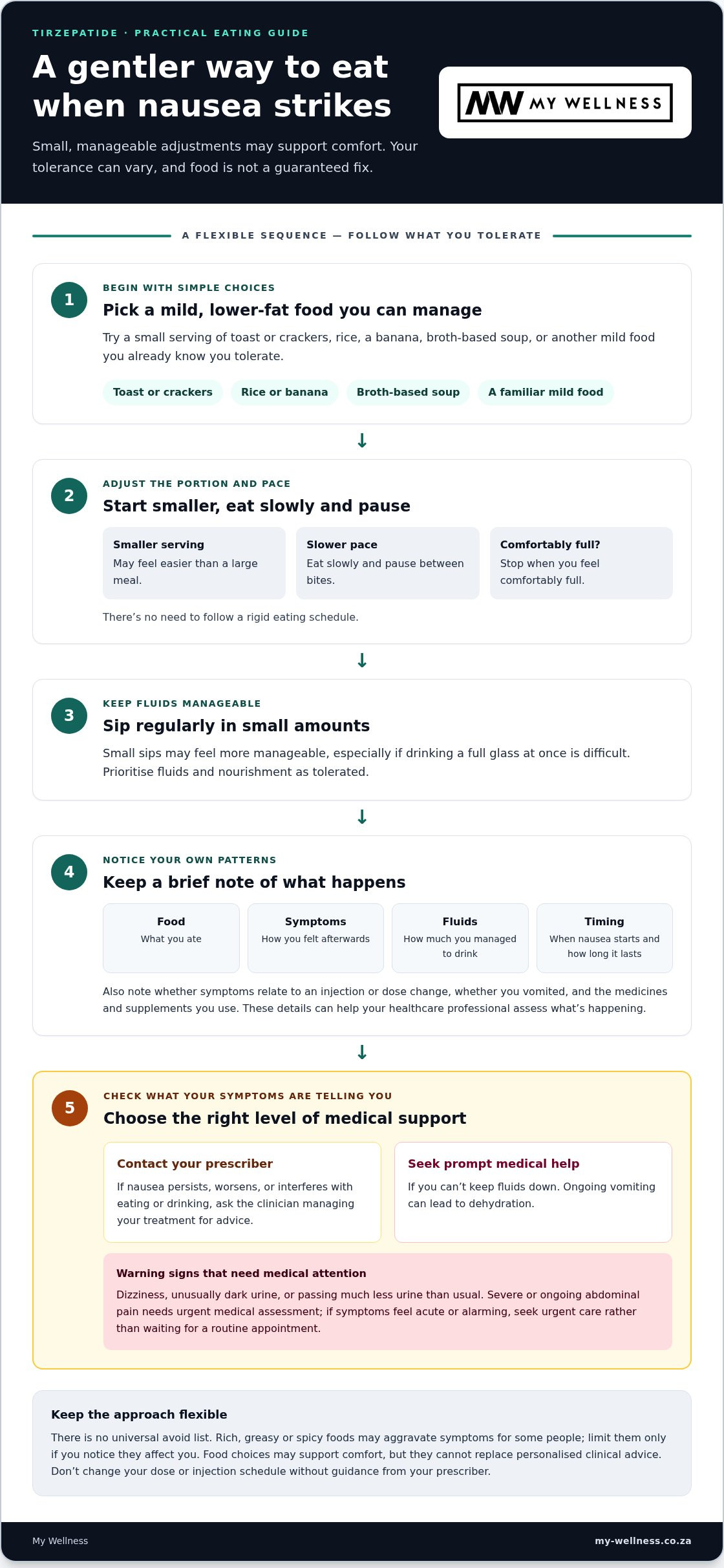
If your appetite is reduced or your stomach feels unsettled, try simple, lower-fat foods in portions that feel manageable. Plain options recommended in clinical guidance include:
- Toast or crackers, rice, or a banana
- Broth-based soup
- Other mild foods you already know you tolerate
These are options to test, not guaranteed remedies. Start with a smaller serving, eat slowly and pause between bites. Stop when comfortably full. You might find smaller portions easier than a large meal, but there’s no need to follow a rigid eating schedule. Sip fluids regularly in small amounts, especially if drinking a full glass at once feels difficult.
Which foods and habits might feel easier during a nauseous spell?
Let your own tolerance guide you. Rich, greasy or spicy foods may aggravate symptoms for some people, but you only need to limit them if you notice they affect you. Keep a brief note of what you ate, how you felt afterwards and how much you managed to drink. This can help you spot personal patterns and share useful details with your healthcare professional.
Vomiting that continues can make it harder to replace lost fluids and raise the risk of dehydration. Keep taking small sips if you can, and seek medical advice if you can’t keep fluids down.
If you’re considering a nutrition product, review the ingredients and nutritional information for the GLP-1 Daily Support Shake and discuss its suitability with your healthcare professional. It is not a medicine and is not meant to treat, diagnose or cure any disease. It isn’t a treatment for nausea.
When nausea on tirzepatide needs medical advice, and how to get support
Mild nausea may settle, but don’t try to push through symptoms that are severe, persistent or getting worse. Contact the clinician who prescribes your tirzepatide for advice, especially if nausea is interfering with eating or drinking. Seek prompt medical help if you can’t keep fluids down, as ongoing vomiting can lead to dehydration. Dizziness, unusually dark urine or passing much less urine than usual can be warning signs.
Severe or ongoing abdominal pain also needs urgent medical assessment. Don’t assume it’s simply a food reaction. If symptoms feel acute or alarming, seek urgent care rather than waiting for a routine appointment.
What to discuss with your prescriber or pharmacist
Useful details can help your healthcare professional assess what’s happening. Note when nausea starts, how long it lasts, whether it relates to an injection or dose change, what you’ve managed to eat and drink, and whether you’ve vomited. Bring a list of medicines and supplements you use, too. A pharmacist can help with medicine-related questions, but contact your prescriber about ongoing symptoms or treatment changes.
Don’t change your dose or injection schedule without guidance from your prescriber. If you’re considering the GLP-1 Daily Support Shake as an optional nutrition product, review its ingredients and nutritional information with a healthcare professional to discuss whether it fits your needs. It isn’t a treatment for nausea.
Food choices may offer practical support, but they can’t replace clinical care. Even if you’re searching for what to eat on tirzepatide to avoid nausea, reach out for personalised advice when symptoms affect your ability to stay hydrated or nourished.
Choose a next step that works for you
Let your next step be guided by what your body tolerates, not pressure to follow a perfect plan. The search for what to eat on tirzepatide to avoid nausea can lead to long lists, but your own response is the more useful guide. Make one manageable adjustment at a time, and keep your prescriber involved if symptoms continue or affect your intake.
My Wellness offers the GLP-1 Daily Support Shake. Review its product information and ingredients, then discuss whether it fits your needs with your healthcare professional. It isn’t a treatment for nausea and can’t replace personalised medical advice. Explore the GLP-1 Daily Support Shake as an option to consider for your nutrition.
Stay curious about your needs, give yourself room to adapt and seek clinical advice when symptoms call for it.
Frequently Asked Questions
What foods should I avoid on tirzepatide if I feel nauseous?
There’s no universal avoid list, so notice which foods affect you. Greasy, fried, very rich or spicy meals may feel harder to tolerate. Consider whether they trigger symptoms for you. Choosing what to eat on tirzepatide to avoid nausea is individual: record what you ate and when symptoms followed, then adjust only the foods that appear to be a problem.
Can eating smaller meals help with nausea on tirzepatide?
Yes, smaller portions may feel more manageable for some people, particularly if a full plate feels overwhelming. Try serving less at first and saving the rest for later if you’re still hungry. Eat at an unhurried pace and pause to check how you feel. There’s no set meal frequency that suits everyone, so focus on what feels comfortable and supports your intake.
What should I drink if tirzepatide makes me feel sick?
Try frequent small sips of water rather than forcing a large drink at once. If plain water feels difficult, clear broth may be another option. Choose fluids you can tolerate, and keep track of whether you’re managing to drink and urinate as usual. If vomiting means you can’t keep fluids down, seek prompt medical advice rather than relying on drinks alone.
When should I contact my doctor about nausea on tirzepatide?
Contact your prescribing clinician if nausea is severe, persistent, worsening or making it difficult to eat and drink. Seek prompt medical advice if you can’t keep fluids down or notice possible dehydration, such as very dark urine or passing much less urine than usual. Severe or ongoing abdominal pain also needs urgent assessment. Don’t change your dose or schedule without your prescriber’s guidance.