


Bone broth may be part of your diet, but it isn’t a proven treatment for sore joints. If you’ve seen claims that bone broth for joint pain and inflammation can rebuild cartilage or ease symptoms, it’s worth checking what research has actually tested.
Food-based support can be appealing, particularly when online advice points in different directions. The important distinction is between research on collagen supplements and research on bone broth itself: findings for one don’t automatically prove benefits from the other. This guide explains what the evidence can and can’t tell us, why broth products may differ in protein and ingredients, and what to check on a label. It also compares broth with other protein-rich foods and established approaches such as exercise, weight management and professional care. That can help you decide whether broth fits your routine without treating it as a replacement for joint care. If pain persists or worsens, seek advice from a health professional.
Key Takeaways
- When assessing claims about bone broth for joint pain and inflammation, check whether research studied broth itself or separate ingredients.
- Compare broth with other protein-rich foods and evidence-informed care, keeping the purpose and limits of each in mind.
- Check the ingredients and nutrition information before choosing a broth that suits your needs.
- Track your symptoms and seek professional advice if joint pain is persistent, worsening or unexplained.
Bone Broth for Joint Pain and Inflammation: What Might It Actually Do?
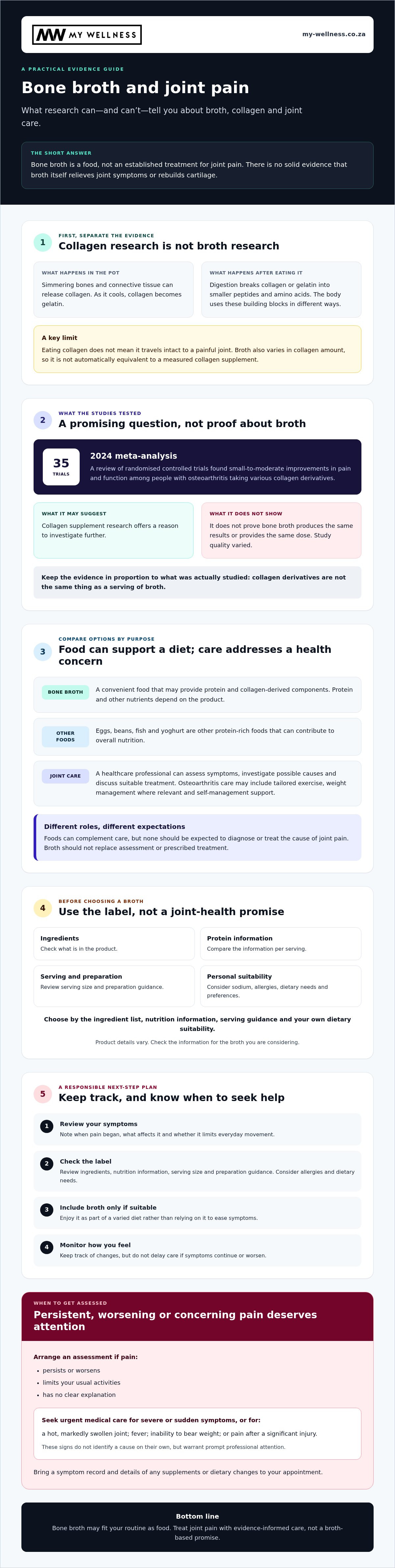
Short answer: bone broth is a food, not an established treatment for joint pain. It may provide protein and collagen-derived components, but there’s no solid evidence that bone broth itself relieves joint symptoms or rebuilds cartilage.
Does bone broth contain collagen that can support joints?
Collagen is a structural protein found in connective tissue. Simmering bones and connective tissue can release collagen, which becomes gelatin as it cools. Stock, sometimes called bone broth, is made by simmering animal bones and connective tissue. The amount of collagen in a serving can vary, however, so broth isn’t automatically equivalent to a measured collagen supplement.
When you eat collagen or gelatin, digestion breaks it down into smaller peptides and amino acids. The body uses these building blocks in different ways; eating collagen doesn’t mean it travels intact to a painful joint. Research on collagen supplements therefore can’t be treated as proof that broth has the same effects or provides the same dose.
A 2024 meta-analysis of 35 randomised controlled trials found small-to-moderate improvements in pain and function among people with osteoarthritis taking various collagen derivatives. Study quality varied, and the findings don’t show that bone broth produces those results. Evidence in brief: collagen supplement research offers a reason to investigate further, not proof that bone broth eases joint pain.
The distinction matters because joint pain can have different causes. Osteoarthritis involves changes in the joint, while rheumatoid arthritis is an autoimmune disease. Bone broth may fit into a varied diet, but it shouldn’t replace assessment or treatment suited to the cause. When considering bone broth for joint pain and inflammation, keep the evidence in proportion to what has actually been studied.
How to Compare Bone Broth with Other Options for Joint Discomfort
Choose an option based on what it can realistically do. Bone broth can be a convenient food within a varied diet, but its protein and other nutrients depend on the product. Eggs, beans, fish and yoghurt are other protein-rich foods that can contribute to overall nutrition. None should be expected to diagnose or treat the cause of joint pain.
Clinical care has a different role: a healthcare professional can assess symptoms, investigate possible causes and discuss suitable treatment. For osteoarthritis, care may include tailored exercise, weight management where relevant and self-management support. The potential to lessen joint pain is sometimes discussed in relation to collagen in bone broth, but the theory doesn’t prove that a particular broth will ease symptoms. Food choices can complement care, not replace a diagnosis or prescribed treatment.
What should you check before choosing a bone broth?
Compare the product label rather than relying on broad claims. Check the ingredients, protein information per serving, serving size and preparation guidance. Review the sodium content, and consider allergies, dietary needs and personal preferences. Product details vary, so verify the information for the broth you’re considering.
Product-checking rule: “Choose by the ingredient list, nutrition information, serving guidance and your own dietary suitability, not by a joint-health promise.”
If you’d like to consider broth as food, you can explore My Wellness bone broths and review the product information before deciding whether one fits your routine. Online claims may link bone broth for joint pain and inflammation, but a product label can’t establish that it treats joint symptoms.
Using Bone Broth Responsibly: Next Steps for Joint Pain
If you’re considering bone broth for joint pain and inflammation, treat it as food, not as a test or treatment. Use these practical steps:
- Review your symptoms. Note when the pain began, what affects it and whether it limits everyday movement.
- Check the label. Review the ingredients, nutrition information, serving size and preparation guidance. Consider allergies and dietary needs.
- Include it if suitable. Enjoy broth as part of a varied diet rather than relying on it to ease symptoms.
- Monitor how you feel. Keep track of changes, but don’t delay seeking care if symptoms continue or worsen.
When should joint pain be assessed by a healthcare professional?
Arrange an assessment if pain persists, worsens, limits your usual activities or has no clear explanation. Seek urgent medical care for severe or sudden symptoms, or concerning changes such as a hot, markedly swollen joint, fever, inability to bear weight or pain after a significant injury. These signs don’t identify a cause on their own, but they warrant prompt professional attention.
Bring a symptom record and details of any supplements or dietary changes to your appointment. A healthcare professional can assess what may be contributing to the pain and discuss appropriate next steps. Don’t stop prescribed treatment or replace it with a food or supplement without discussing the change with the clinician who supports your care.
Keep this in mind: “Food choices may complement care, but they can’t diagnose joint pain or replace appropriate treatment.” Bone broth can still have a place on your menu if it suits your needs. If you’d like to explore the bone broths My Wellness offers, review each product’s current label and choose based on its ingredients and nutrition information, not a promise of joint relief.
Make a confident choice for your joint care
Bone broth can be a food choice, but current evidence doesn’t establish it as a treatment for joint pain or inflammation. Research on collagen supplements isn’t proof that broth has the same effects. Consider broth as part of a varied diet, and check product labels rather than relying on broad joint-health claims.
The right next step depends on your symptoms. Persistent, worsening or unexplained pain deserves assessment by a healthcare professional. Diet can complement a care plan, but it can’t diagnose the cause or replace prescribed treatment.
If bone broth suits your preferences, explore My Wellness bone broths. My Wellness offers bone broths as part of its wellness product range online across South Africa. Review the current product information and choose based on what suits your needs. For a food option that fits your routine, start by comparing the ingredients and nutrition information on the product label.
Frequently Asked Questions
Can bone broth reduce joint pain and inflammation?
There isn’t strong evidence that bone broth itself reduces joint pain or inflammation. Claims about bone broth for joint pain and inflammation are often linked to collagen and other components, but research on individual ingredients doesn’t prove that drinking broth eases symptoms. You can include it as food if it suits your diet, while seeking appropriate care for ongoing joint problems.
Does the collagen in bone broth help with joint pain?
Collagen supplements may offer some benefit for osteoarthritis symptoms, but findings don’t establish that collagen from bone broth has the same effect. Products can differ in collagen content, and digestion breaks collagen down into smaller components that the body uses in different ways. Check the product’s nutrition information, and treat any possible joint benefit as uncertain rather than guaranteed.
How much bone broth should I drink for joint pain?
No evidence-based amount of bone broth has been established for relieving joint pain. If you enjoy it, use it as a food and follow the product’s serving and preparation guidance. Check the ingredients and nutrition information, including sodium, and consider your dietary needs. Don’t increase your intake or delay professional advice in the hope that a larger serving will ease symptoms.
Can bone broth replace treatment for arthritis?
No. Bone broth is a food, not a substitute for arthritis diagnosis or prescribed treatment. Arthritis has different forms and treatment needs, so speak with a healthcare professional about symptoms and care options. Don’t stop or change prescribed medication without discussing it with your clinician. Bone broth may fit into a varied diet, but it can’t determine what’s causing joint pain or manage arthritis on its own.