


Choosing a gut-friendly protein powder takes more than checking the front of the pack. The term is not a guarantee, and tolerance varies from person to person. If you are unsure which protein source to choose, or wary of sweeteners and added fibres, a long ingredient list can make the decision feel harder, not easier.
This guide explains how to compare protein sources, ingredients and labels so you can find an option that fits your preferences and feels comfortable for you. Check dairy and plant-based options, review what is added, and follow the product directions as you assess your tolerance. My Wellness offers vegan protein as a non-dairy option to compare; check the current label for ingredients, allergens and nutrition information. You will also learn when ongoing or severe digestive symptoms call for advice from a healthcare professional.
Key Takeaways
- Treat “gut-friendly” as a personal tolerance question, not a universal guarantee.
- Compare protein sources, allergens and dietary fit when narrowing down gut-friendly protein powder options.
- Check labels for sweeteners and added fibres such as inulin, which may not suit everyone.
- Follow the product directions and change one variable at a time as you assess your tolerance.
What does “gut-friendly protein powder” actually mean?
A gut-friendly protein powder is one whose protein source, serving size and other ingredients suit an individual’s digestive tolerance. It is not a regulated term or a universal guarantee, so a label alone cannot tell you how your body will respond.
Start with the full formula, not just the protein claim. The protein source and serving size may affect how a powder feels, as can additions such as sweeteners or fibre. If you are comparing dairy-based options, protein supplements can come in forms such as concentrate, isolate and hydrolysate. These terms describe how the protein is processed, not a promise that one form will suit everyone.
Why protein source and personal tolerance both matter
Whey comes from milk, while pea protein is plant-based and soy protein comes from soybeans. Each has a different ingredient and allergen profile. Your choice may depend on an allergy, intolerance, dietary preference or simply how you feel after trying a product. Do not assume that plant-based protein is automatically easier to tolerate, or that a particular dairy-based form will cause discomfort.
Check the ingredient and allergen information on the current label, including the serving size and any added ingredients. My Wellness offers vegan protein as a non-dairy option to compare. Review its current label for the protein source, ingredients and allergens before deciding whether it fits your needs.
Keep your own response in view. Follow product directions, and if symptoms persist or you have a medical concern, speak with a healthcare professional for guidance rather than relying on a powder’s marketing claims.
How to compare gut-friendly protein powders without overlooking ingredients
Use the label to compare the whole formula, not just the protein source. A gut-friendly protein powder is not defined by one ingredient: your dietary needs and tolerance matter too. Research has examined the impact on gut microbiota of whey and beef protein supplements, but a study cannot predict how a particular powder will feel for you.
| Check | What to compare | Why it matters |
|---|---|---|
| Protein source | Whey, pea, soy or another source | Match it to your preferences and dietary needs. |
| Allergens | Ingredient list and allergen statement | Check for ingredients you need to avoid. |
| Sweeteners | Names of sweeteners, including sugar alcohols | Some people find particular sweeteners do not suit them. |
| Added fibres | Look for inulin and other added fibres | These may not suit every individual. |
| Dietary fit | Check the full formula against your requirements | “Plant-based” alone does not confirm suitability for every diet. |
Which label details deserve a closer look?
Read the ingredient list, allergen statement and serving-size directions together. Note flavourings, sweeteners and added fibres, then consider your own experience with similar ingredients. A shorter list may be easier to assess, but it does not guarantee comfort or suitability. When comparing products, use the serving directions to check how much of each ingredient you would consume, rather than comparing ingredient lists without their serving context.
For a non-dairy option to assess, explore My Wellness vegan protein. Check its current label for the protein source, ingredients, allergens and serving information before deciding whether it fits your needs.
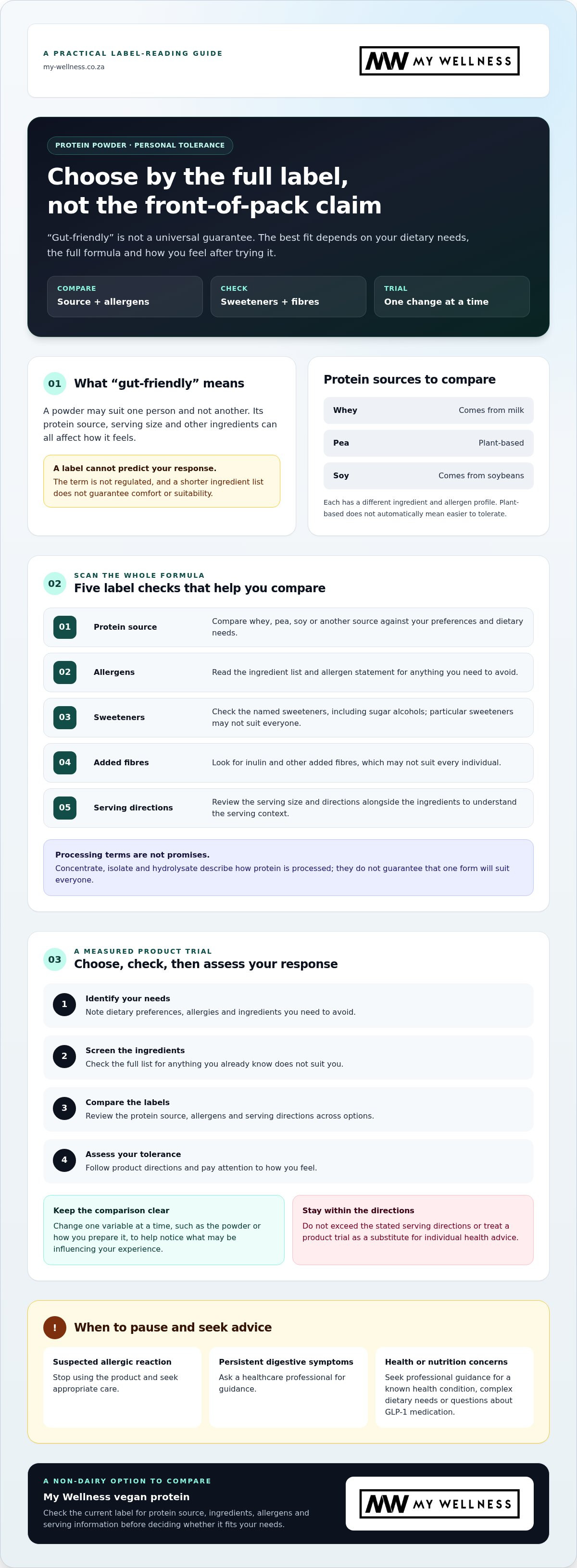
How to choose and trial a protein powder that suits your routine
Make the choice practical. A gut-friendly protein powder should fit your dietary needs and routine, with your own response guiding whether you keep using it.
- Identify your needs. Note dietary preferences, allergies or ingredients you need to avoid.
- Screen the ingredients. Check the full list for anything you already know does not suit you.
- Compare labels. Review the protein source, allergens and serving directions across options.
- Assess your tolerance. Follow the product directions and pay attention to how you feel.
Keep your comparison clear by changing one variable at a time, such as the powder or how you prepare it. This makes it easier to notice what may be influencing your experience. Do not exceed the stated serving directions or treat a product trial as a substitute for individual health advice.
When should you pause a product trial or seek advice?
If you suspect an allergic reaction, stop using the product and seek appropriate care. For persistent digestive symptoms, a known health condition or complex dietary needs, ask a healthcare professional for guidance. If you use GLP-1 medication, discuss nutrition questions with your healthcare professional rather than assuming a protein powder is suitable.
My Wellness offers vegan protein as a non-dairy option to consider. Check the current label for its protein source, ingredients, allergens and serving information before deciding if it matches your needs. Find a protein option from My Wellness and base your choice on the label and your preferences, not a broad promise.
Choose with confidence, one label at a time
The best fit is not decided by a “gut-friendly” claim. It comes down to your dietary needs, the ingredients on the label and your personal response. Compare protein sources and serving directions, follow the product instructions, and change one variable at a time. If symptoms persist or you have a health concern, seek advice from a healthcare professional.
Use these checks to guide your search for a gut-friendly protein powder, without expecting one formula to suit everyone. My Wellness offers vegan protein and supplements, with products available online to customers across South Africa. Review current product labels for ingredients, allergens and nutrition details before deciding what fits your preferences.
To compare a non-dairy option, explore vegan protein options from My Wellness and check the product label against your needs.
Frequently Asked Questions
Is vegan protein powder easier to digest?
Vegan protein is not automatically easier to digest for everyone. Tolerance depends on the person, the specific protein source, such as pea or soy, other ingredients and serving size. Check the full label for allergens, sweeteners and added fibres, then consider your dietary needs and past experience rather than relying on a broad “easy-to-digest” claim.
Can protein powder cause bloating or digestive discomfort?
Some people may notice bloating or other digestive discomfort after using a protein powder, but responses and possible triggers vary. The protein source, full ingredient list and serving size may all be relevant. If you suspect a product is causing a reaction, stop using it. Seek advice from a healthcare professional if symptoms persist or concern you.
What should I look for in a gut-friendly protein powder?
Compare the protein source, allergen information, serving size, sweeteners and added fibres. The phrase “gut-friendly” is not a guarantee that a powder will suit your personal tolerance. Match label details to your dietary needs and experience, and check the full ingredient list. Verify product-specific claims on the label rather than relying on front-of-pack wording alone.
Is protein powder suitable whilst taking GLP-1 medication?
Whether protein powder suits you while taking GLP-1 medication depends on your individual nutrition needs and medication circumstances. A general article cannot determine what is appropriate for you. Discuss protein intake and supplement choices with your prescribing healthcare professional or a registered dietitian. My Wellness sells wellness products, including a GLP-1 Daily Support Shake, not prescription GLP-1 medication.