


What if bone broth is better understood as a source of building-block amino acids than a quick fix for gut problems? If persistent digestive discomfort has left you weighing up conflicting claims about collagen, gelatin and “gut-healing” foods, you’re right to want more than superfood promises. Bone broth for leaky gut syndrome is often discussed for its glutamine and glycine, but there’s no strong evidence that broth alone can seal the gut lining or cure increased intestinal permeability.
That doesn’t mean it has no place in a considered gut-health plan. This guide explains what its amino acids may contribute, how collagen and gelatin differ, and what to check when choosing a broth. You’ll also find a practical approach to using it alongside broader habits that support digestive health, without mistaking a supportive food for a proven treatment.
Key Takeaways
- Learn what amino acids in bone broth may contribute to gut health, and why they’re not proof of a standalone cure for increased intestinal permeability.
- Discover what to check when choosing bone broth for leaky gut syndrome, including ingredient transparency and available nutrition information.
- Compare broth powders with stock cubes and explore practical ways to include broth in a morning routine.
- Find out how to plan broth alongside GLP-1 support shakes while keeping your overall nutrition needs in view.
The Science of Gut Permeability: How Bone Broth Repairs the Lining
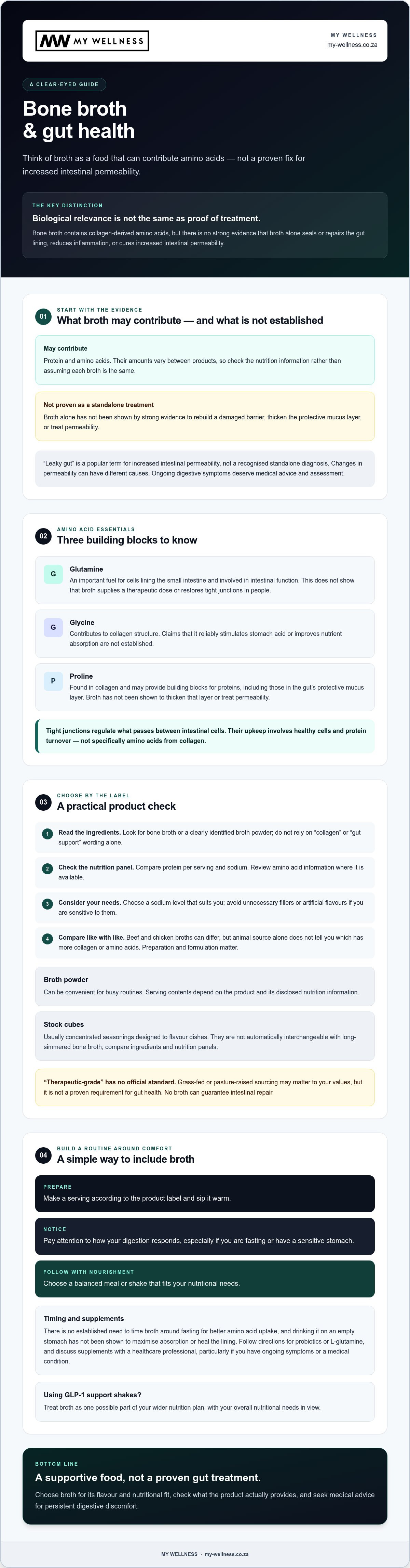
“Leaky gut” is a popular term for increased intestinal permeability, in which the gut barrier allows more substances to pass through than usual. It isn’t a recognised standalone diagnosis, and changes in permeability can have different causes. Collagen is sometimes described as glue for the gut lining, but that’s an analogy, not proof that eating collagen rebuilds a damaged barrier. Bone broth contains collagen-derived amino acids, yet there’s no high-quality evidence that broth alone repairs the lining or reduces inflammation.
Tight junctions are protein structures between intestinal cells that regulate what passes through the barrier; their upkeep depends on healthy cells and protein turnover, which require amino acids but not specifically those from collagen.
The Role of Glutamine and Glycine in Tight Junction Integrity
Glutamine is an important fuel for cells lining the small intestine and is involved in intestinal function. That makes it relevant to gut biology, but it doesn’t establish that broth supplies a therapeutic dose or restores tight junctions in people. Amino acid levels also vary between broths, so check product nutrition information rather than assuming a consistent amount.
Glycine contributes to collagen structure, but claims that it reliably stimulates stomach acid or improves nutrient absorption aren’t established. Proline is also found in collagen and may provide building blocks for proteins, including those in the gut’s protective mucus layer. However, there’s no strong evidence that broth thickens this layer or treats permeability.
So, consider bone broth for leaky gut syndrome as a food that can contribute amino acids, not a proven treatment. Choose it for its flavour and nutritional fit, and seek medical advice for ongoing digestive symptoms. A clinician can help investigate causes and guide care; broth shouldn’t replace that assessment.
Selecting Therapeutic-Grade Bone Broth: Quality and Purity Standards
“Therapeutic-grade” sounds reassuring, but there’s no official standard for the term. Focus instead on what the label confirms: ingredients, protein content, sodium and, where available, amino acid information. Long-simmered bone broth is made by cooking bones in liquid over time; standard stock cubes are usually concentrated seasonings designed to flavour dishes. They aren’t automatically interchangeable, so compare their ingredients and nutrition panels.
Powdered broth can be a convenient option for busy South African routines. But don’t assume every serving delivers a consistent amino acid dose: that depends on the product and its disclosed nutrition information. The Cleveland Clinic’s overview of bone broth benefits also provides useful context on its nutrients, whilst making clear that benefits shouldn’t be overstated.
Why Amino Acid Profiles Matter for Intestinal Health
Beef and chicken broths may differ in collagen and amino acid content, but animal source alone doesn’t tell you which has more. Preparation and formulation matter. Choose based on the product’s actual label, not claims that one type is best for a specific gut-healing goal. Grass-fed or pasture-raised sourcing may matter to your values, but it isn’t a proven requirement for gut health.
Scan the ingredient list for bone broth or a clearly identified broth powder, rather than relying on “collagen” or “gut support” wording alone. Check protein per serving and sodium; avoid unnecessary fillers or artificial flavours if you’re sensitive to them, and choose a sodium level that suits your needs. High-purity options can make ingredient choices clearer, but no broth can guarantee intestinal repair.
For a convenient option, explore My Wellness bone broths and review each product’s ingredients and nutrition details before choosing.
Integrating Bone Broth into Your Daily Wellness Routine
Build a routine around comfort and consistency, not promises of “gut repair”. Bone broth can contribute protein and amino acids, but there’s no good evidence that drinking it on an empty stomach maximises absorption or coats the stomach in a way that heals the lining. If you enjoy it, try this simple morning sequence:
- Prepare a serving according to the product label, and sip it warm.
- Notice how your digestion responds, especially if you’re fasting or have a sensitive stomach.
- Follow with a balanced meal or shake that fits your nutritional needs.
Strategic Timing for a Sustainable Routine
There’s no established need to time broth around fasting for better amino acid uptake. Nor should you assume it treats intestinal permeability. If you take probiotics or L-glutamine, check their directions and discuss supplements with a healthcare professional, particularly if you have ongoing symptoms or a medical condition. Keep travel simple: a broth powder can be portable, but follow its preparation instructions and pack it securely for the office.
If you use GLP-1 support products, treat broth as one possible part of your wider nutrition plan, not a muscle-preserving treatment. Adequate total protein and individual dietary needs matter; a shake and broth aren’t automatically interchangeable. My Wellness offers a GLP-1 Daily Support Shake and GLP-1 Muscle Protect Creatine, but check each label and seek professional guidance to decide what suits you.
For keto meals, use prepared broth as a base for soups or sauces. It adds flavour and may contribute protein, though collagen amounts vary by product. Consider Keto Muscle Meals as another option within a broader eating plan. Used this way, bone broth for leaky gut syndrome is a convenient food choice, not a substitute for diagnosis or treatment.
Build a Gut-Supportive Routine You Can Sustain
Bone broth can be a convenient source of protein and amino acids, but it isn’t a proven fix for increased intestinal permeability. The most useful approach is to choose a broth by its ingredients and available nutrition information, then fit it into a balanced routine that suits your needs. If you’re considering bone broth for leaky gut syndrome, keep expectations realistic and seek medical advice for persistent digestive symptoms.
My Wellness offers bone broths alongside products designed for keto and GLP-1 support lifestyles. Check the label for the details that matter to you, including protein, sodium and any available amino-acid information. Use broth as a practical food choice, not a replacement for diagnosis, treatment or overall nutrition.
Explore My Wellness bone broth ranges and take your next step towards a routine that feels clear, considered and sustainable.
Frequently Asked Questions
How long does it take for bone broth to heal a leaky gut?
There’s no proven timeline because bone broth hasn’t been shown to heal increased intestinal permeability on its own. “Leaky gut syndrome” isn’t a recognised standalone medical diagnosis, and digestive symptoms can have different causes. Broth may provide protein and amino acids as part of your diet, but don’t use it to delay medical assessment. Speak with a healthcare professional about persistent or worsening symptoms.
Can I drink bone broth every day for gut health?
You can include bone broth daily if you enjoy it, tolerate it and it fits your overall diet. Check the label for serving guidance, protein and sodium, especially if you’re monitoring salt intake or have dietary restrictions. Daily use isn’t necessary for gut health, and broth alone isn’t a proven treatment for increased intestinal permeability. Prioritise a varied diet and seek advice for ongoing symptoms.
Is beef or chicken bone broth better for leaky gut syndrome?
Neither beef nor chicken broth is proven to be better for leaky gut syndrome. Their protein and amino acid profiles can vary with ingredients and preparation, so animal source alone won’t tell you how much collagen or protein a serving contains. Compare product labels and choose one that suits your taste, dietary needs and nutrition goals. Don’t treat either type as a gut-healing cure.
What happens if I drink bone broth while on GLP-1 support medications?
Bone broth can be a food choice alongside a prescribed GLP-1 medication, but it doesn’t replace the medicine or guarantee digestive or muscle benefits. There’s no basis to assume broth changes the medication’s effect; individual needs and tolerability can differ. Ask your prescriber or pharmacist how to manage your nutrition and symptoms. My Wellness GLP-1 support products are supplements, not prescription GLP-1 medications.