


Gulping down litres of plain water might actually be worsening your exhaustion. If you find yourself asking why you feel dizzy, lightheaded, and drained whilst taking modern weight loss injections, you are not imagining it. You are likely experiencing an electrolyte imbalance on weight loss medication. These treatments blunt your natural thirst cues alongside hunger, leaving cellular hydration compromised while plain water flushes out the crucial minerals your body desperately needs.
It is deeply frustrating to commit to your health journey only to feel sidelined by morning headaches, muscle cramps, and persistent brain fog. You deserve to feel vibrant every day. Discover why active fluid shifts deplete your system and how targeted mineral replenishment delivers rapid relief. Here is your essential guide to understanding GLP-1 hydration dynamics and building a simple, effective routine for sustained daily energy.
Key Takeaways
- Uncover why GLP-1 treatments mute your brain's thirst centres alongside appetite, leading to unexpected fluid depletion.
- Discover why drinking excess plain water can aggravate an electrolyte imbalance on weight loss medication by diluting vital mineral reserves.
- Master how key electrolytes act as cellular gatekeepers to restore hydration and rapidly resolve muscle cramps, headaches, and brain fog.
- Implement a practical daily hydration schedule designed around delayed gastric emptying to sustain peak energy throughout the day.
Understanding Electrolyte Imbalance on Weight Loss Medication
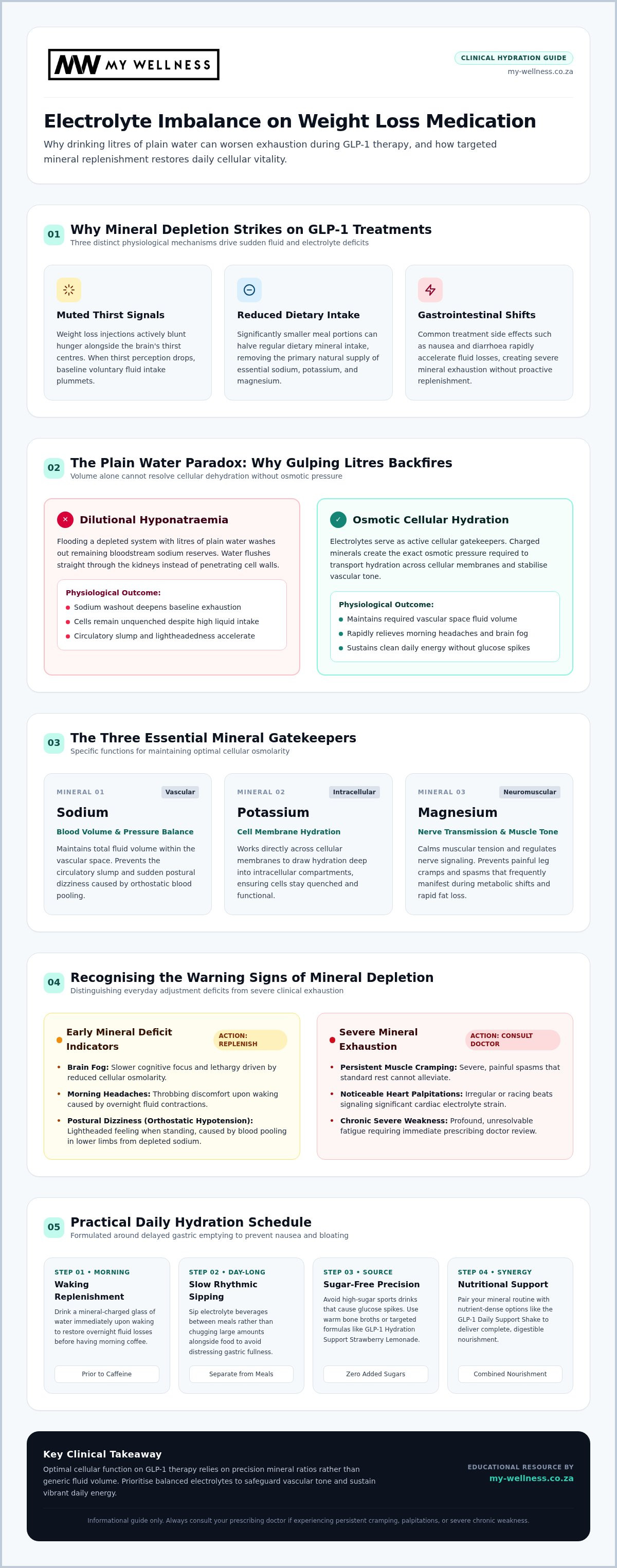
Mineral depletion strikes quickly when your metabolic intake changes. An electrolyte imbalance occurs when vital minerals like sodium, potassium, and magnesium drop below healthy physiological levels. Whilst many clinical resources focus strictly on kidney endpoints, the outpatient reality is far simpler: weight loss injections suppress both hunger and thirst centres in the brain. When you stop feeling thirsty, your fluid intake plummets. At the same time, eating significantly smaller meals halves your baseline dietary mineral intake.
Common gastrointestinal side effects such as nausea or diarrhoea accelerate these losses rapidly. Gaining a clinical understanding of electrolyte imbalance reveals that optimal cellular function relies on precision, not just volume. Without proactive replenishment, developing an electrolyte imbalance on weight loss medication becomes an everyday hazard that undermines your daily vitality.
Recognising the Warning Signs of Mineral Depletion
Early mineral deficits manifest through persistent brain fog, throbbing morning headaches, and sudden postural dizziness.
When systemic fluid drops alongside low sodium levels, total blood volume contracts. This circulatory slump causes orthostatic hypotension; blood pools in your lower limbs, depriving your brain of quick oxygen delivery when you stand up. Prioritise mineral replacement immediately to stabilise vascular tone.
Listen closely to your body's signals. If you experience severe, persistent muscle cramping, noticeable heart palpitations, or chronic weakness that rest cannot resolve, consult your prescribing doctor right away. These symptoms signal severe mineral exhaustion requiring professional clinical review.
Why Plain Water Fails to Correct Cellular Dehydration
Drinking litres of plain water often backfires. When you flood a depleted system with pure water, you risk dilutional hyponatraemia. This process washes out remaining bloodstream sodium, which paradoxically deepens fatigue and accelerates an electrolyte imbalance on weight loss medication. Water cannot enter cells through volume alone; it requires osmotic pressure created by charged minerals.
Sodium and potassium serve as cellular gatekeepers. Sodium maintains fluid volume in the vascular space, whilst potassium pulls hydration directly across cellular membranes. Magnesium regulates nerve transmission and muscular contraction, preventing the painful leg cramps common during rapid fat loss. Without these minerals, water simply flushes straight through you without quenching cellular thirst.
Essential Minerals Needed for Optimal Cellular Osmolarity
Achieving optimal osmolarity requires strategic replenishment rather than generic fluid loading:
- Sodium and Potassium: Regulate systemic blood volume and intracellular hydration to sustain clean energy.
- Magnesium: Calms muscular tension and prevents spasms as metabolic shifts occur.
Reaching for conventional sports drinks is counterproductive. These beverages carry massive loads of refined sugar, spiking glucose and directly conflicting with your metabolic weight management targets. Instead, turn to gentle, digestible options such as warm bone broths, or explore targeted, sugar-free formulas like GLP-1 Hydration Support Strawberry Lemonade designed with clean electrolyte ratios. As highlighted by recent clinical findings, proactive mineral replacement remains essential to keep your cells functioning smoothly.
How to Build an Effective Daily Hydration Strategy
Timing matters just as much as mineral quality when your digestive tract slows down. Because weight loss medications delay gastric emptying, downing large volumes of fluid in one sitting can trigger intense nausea, bloating, or uncomfortable fullness. Developing a rhythmic, progressive routine works with your body's altered digestion whilst keeping cellular reservoirs consistently topped up.
Begin the moment you wake up. Drink a mineral-charged glass of water immediately to replenish fluids lost overnight before pouring your morning coffee. Move methodically through your day by sipping balanced electrolyte beverages slowly between meals rather than chugging liquids alongside food. Incorporating targeted solutions like GLP-1 Hydration Support Strawberry Lemonade delivers clean mineral ratios without unwanted sugars, effectively warding off an electrolyte imbalance on weight loss medication.
Pairing Hydration with Complete Nutritional Support
Cellular hydration functions best alongside consistent, high-quality nutritional nourishment. Pair your daily mineral routine with nutrient-dense options like the GLP-1 Daily Support Shake. This strategic combination delivers clean, digestible protein and essential micronutrients without overloading a sensitive stomach.
Listen to your biofeedback and track your hydration markers continuously. Check your urine colour throughout the afternoon, aiming for a pale straw tint and adjusting your fluid intake dynamically when temperatures rise. Sustaining balanced cellular hydration prevents an electrolyte imbalance on weight loss medication, safeguarding your hard-earned lean muscle and empowering you to maintain peak daily vitality.
Reclaim Your Daily Vitality and Mineral Balance
Modern weight loss protocols transform your metabolic health, but you shouldn't let mineral depletion derail your momentum. Resolving morning fatigue, headaches, and muscle spasms starts with looking beyond plain tap water. Real cellular hydration demands bioavailable minerals matched to your body's slowed gastric pace. Proactively managing an electrolyte imbalance on weight loss medication keeps your cells energised, protected, and performing at their best.
Give your body the high-purity support it deserves. Restore your vital mineral balance with My Wellness through clean nutritional profiles designed for sensitive digestive systems. Formulated specifically to support GLP-1 wellness journeys, these targeted solutions protect your daily comfort so you can thrive. Step into each day feeling refreshed, empowered, and fully aligned with your goals.
Frequently Asked Questions
Can weight loss medication cause severe electrolyte imbalances?
Yes, severe electrolyte depletion can develop if acute side effects occur. Persistent vomiting or diarrhoea rapidly strips away circulating minerals. Combined with muted thirst cues and reduced food consumption, these losses can precipitate a dangerous electrolyte imbalance on weight loss medication. In extreme cases, dehydration increases the risk of acute renal strain, making consistent mineral hydration essential rather than optional.
Why does drinking water make me feel nauseous on weight loss injections?
Drinking large amounts of water causes nausea because these medications significantly delay gastric emptying. When fluid sits in a slow-moving stomach, it triggers sensory stretch receptors that spark queasiness. Consuming plain water without minerals also fails to stimulate proper absorption. Sip small volumes slowly throughout the day rather than chugging full glasses, keeping your stomach comfortable whilst maintaining cellular hydration.
What are the early warning signs of low potassium or sodium?
Early warning signs typically start with lethargy, brain fog, and throbbing morning headaches. Low sodium frequently presents as lightheadedness or dizziness when standing up quickly. In contrast, dipping potassium levels often trigger twitching calves, painful muscle cramps, or irregular flutter sensations in the chest. Monitoring these subtle bodily cues helps you catch mineral deficits before they turn into disruptive daily hurdles.
Do I need special electrolyte supplements whilst taking weight loss medication?
Standard sports drinks pack excess sugars that clash with your metabolic routine, while unflavoured water lacks mineral density. Choosing targeted formulas like GLP-1 Hydration Support Strawberry Lemonade provides clean, bioavailable sodium and potassium without added sugars. This tailored nutritional support protects against an electrolyte imbalance on weight loss medication, delivering immediate cellular refreshment without irritating a sensitive digestive tract.